
Last updated September 25, 2026
Non-destructive entry first, always - and we re-key Schlage, Kwikset, and Baldwin locks on the spot while you watch
You get a price before we start. It does not change when we arrive. No surprises.
Commercial Locksmith Maintenance Checklist for Atlanta Homeowners
A commercial cylindrical lockset rated for 250,000 cycles will hit that limit in under three years on a high-traffic Atlanta retail door. Most building managers we meet in Buckhead, Midtown, and along the Buford Highway corridor cannot name the cycle rating of a single lock on their property. This guide - alongside The Complete Guide to Locksmith in Atlanta - shows you how to read the hardware already installed, what Atlanta’s humidity and temperature swings do to steel frames and deadbolt alignment, and how to produce a documented inspection record that satisfies most commercial lease maintenance clauses. You’ll leave with a checklist you can run quarterly, a spreadsheet format for your files, and a clear sense of which failures require a factory-authorized technician.
Quick Answer
Commercial locksmith maintenance in Atlanta should be performed quarterly on all exterior and high-traffic doors, with annual deep inspections of access control systems and panic hardware. A complete checklist covers cycle-rated locksets, door closer function, deadbolt throw alignment, strike plate security, credential audits, and battery replacement schedules. Document each inspection with dated photos and a signed log - this satisfies most Atlanta commercial lease “tenant maintenance obligation” clauses and preserves manufacturer warranty coverage.
Table of Contents
- Understanding Cycle-Rated Hardware: What the Numbers Mean
- How Atlanta’s Humidity and Thermal Cycles Affect Commercial Doors
- The Quarterly Inspection Checklist
- Annual Deep Inspection: Access Control and Panic Hardware
- Documentation That Satisfies Atlanta Lease Clauses
- Which Failures Void Manufacturer Warranties
- Common Mistakes to Avoid
- When to Call a Professional
- Frequently Asked Questions
- The Bottom Line
Understanding Cycle-Rated Hardware: What the Numbers Mean
Every commercial lockset carries a cycle rating stamped on the chassis or published in the product data sheet. A cycle is one complete locking and unlocking operation. Grade 1 cylindrical locks are tested to 800,000 cycles under ANSI/BHMA standards. Grade 2 locks typically rate at 400,000 cycles. Grade 3, which we rarely recommend for commercial applications in Atlanta, tests to 200,000 cycles.
Here’s the calculation most facility managers miss. A door with 200 entries per business day - a conservative figure for a ground-floor retail space in Ponce City Market or a medical office near Emory - accumulates roughly 52,000 cycles annually. A Grade 1 lockset at 800,000 cycles has a theoretical service life of fifteen years in light commercial use. In practice, Atlanta’s particulate load, the grit that blows in from construction sites and highway corridors, accelerates wear on the latch bolt and internal springs. We regularly find Grade 1 Sargent locks in Atlantic Station properties showing significant wear at eight to ten years, and Grade 2 hardware failing at four to six years.
To find your cycle rating, remove the rose plate or check the original specification sheet. If the hardware was installed by a previous tenant and no records exist, the rating is often embossed on the latch face or printed on a label inside the chassis. Photograph this during your first inspection. If you cannot locate it, a factory-authorized technician can identify the series and pull the specification. Commercial locksmith services in Atlanta should include this identification as a standard part of any maintenance survey.
The cycle rating matters for scheduling replacement, not just repair. A lock approaching its rated cycle count will fail unpredictably, often during peak traffic. Planning replacement at 75% of rated cycles eliminates emergency callouts and allows you to schedule the work during low-traffic windows.
How Atlanta’s Humidity and Thermal Cycles Affect Commercial Doors
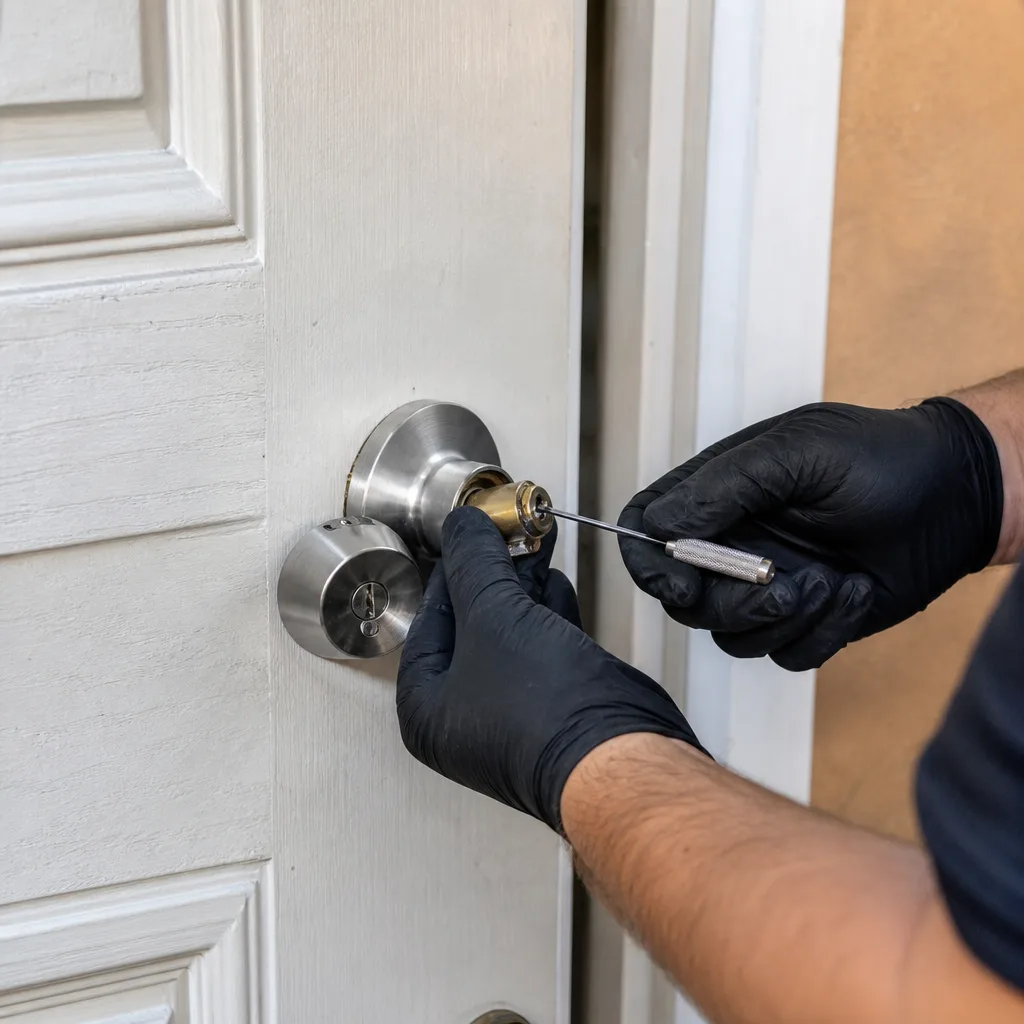
Atlanta’s climate presents a specific set of mechanical stresses on commercial door hardware. Relative humidity regularly exceeds 80% from May through September, with daily temperature swings of twenty to thirty degrees common in spring and fall. These conditions produce three predictable failure modes we document repeatedly across the metro area.
Steel frame expansion and contraction. Hollow metal door frames expand in summer heat and contract in winter cold. Over years, this movement wallows out the strike plate mortise, causing the deadbolt throw to miss the strike cavity or bind on entry. In buildings constructed during Atlanta’s 2015-2019 commercial boom - the West Midtown warehouse conversions, the new Class A stock in Sandy Springs - we find this misalignment most acute on south and west-facing doors where solar gain peaks. A deadbolt that requires shoulder pressure to engage is not a user problem. It is a frame movement problem that will eventually warp the bolt or crack the mechanism.
Corrosion of non-stainless components. The internal springs of lower-grade locksets, particularly entry-level cylindrical models, show rust pitting after three to four Atlanta summers. This increases operating friction and reduces spring return force. The key symptom is a latch that does not fully retract or a knob that sticks in the depressed position. We replace these with stainless steel or nickel-silver spring packs when we encounter them during scheduled maintenance.
Electronic component degradation. Access control readers and electrified strikes generate heat during operation. In unconditioned vestibules or exterior alcoves, the combination of ambient humidity and internal temperature cycling causes condensation on circuit boards. We see this most often in Atlanta’s older commercial stock, the 1980s and 1990s office parks in Perimeter Center and along I-85, where original access control installations were not specified for the local climate.
Your quarterly checklist should include a specific humidity-thermal inspection: check deadbolt throw alignment with the door at both morning and afternoon temperatures, photograph any strike plate wear, and note any electronic reader that has required a power cycle to restore function.
The Quarterly Inspection Checklist
Run this checklist every ninety days on all exterior doors, all fire-rated egress doors, and any interior door with a traffic count exceeding fifty cycles daily. Assign a single responsible party and maintain a dated log with photographs.
Lockset Function
- Cycle test: Operate the lock twenty times with the door open. The latch should retract smoothly and return to extended position without hesitation. Any catch, grind, or slow return indicates internal wear or spring fatigue.
- Key operation: Insert and remove the key ten times. Binding, excessive wobble, or the need to jiggle the key indicates pin chamber wear or key duplication drift. A key that has been copied multiple times at hardware store kiosks will not match the original bitting tolerance.
- Lever or knob torque: Apply gradual pressure to the lever in the unlocked position. ANSI Grade 1 levers withstand 360 foot-pounds of torque. Any visible flex or looseness in the mounting indicates spindle wear or improper installation.
- Cycle rating verification: Confirm the rating is recorded in your log. If unknown, note “rating unidentified - schedule identification.”
Deadbolt and Strike Alignment
- Throw engagement: With the door closed, extend the deadbolt. It should enter the strike cavity without resistance. If you must push the door or apply body weight, measure the misalignment with a feeler gauge and photograph the strike plate wear pattern.
- Throw length: A standard deadbolt throws one inch. Measure with a ruler. Anything less indicates bolt wear or improper installation.
- Strike plate security: Verify the strike is secured with three-inch screws into the frame stud, not just the jamb. Any looseness or visible frame splintering is a security and fire-rating issue.
Door Closer and Auxiliary Hardware
- Closing speed: Time the door from 90 degrees open to fully closed. ANSI standards specify no less than five seconds for accessibility compliance. A door that slams indicates closer fluid leakage or improper valve adjustment.
- Latching speed: The final ten to fifteen degrees of closure should accelerate slightly to ensure latch engagement. A door that drifts closed but does not latch is a closer adjustment issue, not a lock problem.
- Backcheck function: Open the door forcefully. The closer should cushion the opening at approximately 75 degrees to prevent wall damage. Failed backcheck damages both the closer and the wall substrate.
Key Control and Cylinder Security
- Key inventory: Count issued keys against your log. Any unaccounted keys trigger a rekey decision.
- Cylinder tightness: Attempt to rotate the cylinder face with moderate hand pressure. A cylinder that turns in the door indicates loose set screws or stripped mounting, both of which compromise security and warranty coverage.
- High-security verification: If your property uses high-security cylinders such as Mul-T-Lock or Medeco, verify the keyway has not been compromised by unauthorized key duplication. High-security keys require factory-authorized duplication; standard key machines cannot replicate them.
Annual Deep Inspection: Access Control and Panic Hardware
Once yearly, or twice yearly for properties with over one hundred daily entries, conduct a comprehensive inspection of electronic access control and life safety hardware. This work requires coordination with your fire alarm vendor for any system that interfaces with fire suppression or egress control.
Access Control Systems
Credential audit. Export the active credential list from your access control software. Cross-reference against current employees, contractors, and tenants. In Atlanta’s high-turnover retail and restaurant environments, particularly along Buford Highway and in the Edgewood corridor, we find fifteen to twenty percent of active credentials belong to terminated personnel. This is not a technology failure. It is a procedure failure.
Battery backup test. Power down the panel and verify battery runtime against manufacturer specification. Most panels specify four to eight hours of standby. In Atlanta, where summer storms and ice events cause periodic outages, we recommend replacement at 70% of rated capacity, not at failure. Battery replacement costs $80-$180 per panel; emergency service after a failure costs significantly more and leaves the property unsecured during the gap.
Reader function and alignment. Test every reader with a known good credential at varying distances and angles. Clean the reader face with manufacturer-approved solution. Note any reader that requires multiple attempts or specific positioning - this indicates antenna degradation or mounting shift.
Lock power draw. Measure current draw on electrified strikes and magnetic locks. Increased draw indicates mechanical binding or coil degradation. For access control systems in Atlanta, we document baseline draw at installation and flag any 15% increase as a replacement trigger.
Panic Hardware and Fire-Rated Egress
Inspect all panic bars and fire exit hardware for proper latching, dogging function (where equipped), and clear egress operation. The Georgia State Minimum Standard Fire Code, adopted from the International Fire Code with state amendments, requires annual inspection of panic hardware by a qualified person. Your documented inspection satisfies this requirement if it includes:
- Verification that the touchpad or crossbar operates with no more than fifteen pounds of force
- Confirmation that the latch retracts fully and the door opens without binding
- Documentation of any field modifications, including latch protectors or security covers
- Photograph of the fire rating label on the door and frame, confirming no voids or penetrations
Field modifications are a common warranty void. A panic bar with an aftermarket alarm kit or security cover that was not factory-tested with that device loses its UL listing. We encounter this frequently in Atlanta’s converted industrial properties, where owners have added security hardware to original fire exits without engineering review.
Documentation That Satisfies Atlanta Lease Clauses
Most Atlanta commercial leases include a “tenant maintenance obligation” clause requiring the tenant to maintain all locks, keys, and security hardware in good working order. The clause language varies, but the enforceable standard is documentation: dated evidence that inspection occurred and deficiencies were addressed.
We recommend a simple format that has held up in lease disputes we’ve been asked to support:
| Element | Requirement | Format |
|---|---|---|
| Inspection date | Quarterly, with annual deep inspection | Calendar-scheduled, logged |
| Inspector identification | Name and affiliation | Signed log entry |
| Door identification | Unique identifier per door | Building plan or numbered sticker |
| Hardware inventory | Manufacturer, series, cycle rating | Photograph and specification |
| Condition assessment | Functional, repair needed, or replace | Standardized rating scale |
| Deficiency resolution | Date and description of repair | Invoice or work order reference |
| Photographic record | Strike plate, latch face, overall door | Dated digital file, retained 3 years |
This format mirrors the documentation Novak Lock & Security Atlanta produces on every service visit under The Haven Standard. Haven Standard Clause 4 requires a documented photo record on every visit, included as standard. The same discipline applied to your internal maintenance program satisfies lease obligations and supports insurance claims if a security incident occurs.
For properties in Atlanta’s historic districts - the Old Fourth Ward, Inman Park, Castleberry Hill - where building codes and preservation requirements overlap, your documentation should also note any hardware that contributes to historic tax credit eligibility. Replacement of original hardware with modern equivalents can jeopardize credits; repair or like-for-like replacement preserves them.
Which Failures Void Manufacturer Warranties
Manufacturer warranties on commercial lock hardware are more conditional than most purchasers assume. We have processed warranty claims for Yale, Baldwin, Sargent, and Mul-T-Lock products, and the denial reasons follow predictable patterns. Your maintenance checklist should specifically guard against these void triggers.
Improper lubrication. Most manufacturers specify dry lubricant or light machine oil. WD-40 and graphite powder are common DIY choices that void warranties. WD-40 attracts particulate and gums the mechanism. Graphite powder, effective in dry climates, cakes in Atlanta’s humidity and jams pin chambers. Use only manufacturer-specified lubricants, applied sparingly during scheduled maintenance.
Field modification. Any drilling, grinding, or component substitution not shown in the factory installation manual voids the warranty. This includes adding through-bolts for lever reinforcement, modifying the strike cavity, or installing aftermarket cylinders in a lockset that was not designed for interchangeable cores.
Failure to maintain. Warranties increasingly include maintenance requirements as enforceable conditions. Sargent’s commercial warranty, for example, requires annual inspection by a qualified technician for full coverage beyond the base period. The inspection log you maintain satisfies this if performed by or reviewed by a factory-authorized service provider.
Environmental exposure beyond specification. Hardware installed on exterior doors without proper weatherstripping, or in coastal-adjacent environments with salt air exposure, carries reduced or voided warranty coverage. Atlanta is not coastal, but the humidity and particulate load in industrial zones can trigger environmental exclusion clauses if the installation location was not disclosed at purchase.
Unauthorized key duplication. High-security cylinders with patented keyways - Mul-T-Lock’s MT5+, for example - require authorized duplication. A key copied at an unauthorized outlet, identified by bitting analysis after a security incident, voids the cylinder warranty and may void coverage for associated hardware.
Preserve your warranty coverage by maintaining the inspection log, using only authorized service providers for repair, and retaining original purchase documentation with the installation location specified.
Common Mistakes to Avoid
- Waiting for a failure event to inspect. A lock that fails during business hours costs you a service call. A lock that fails after hours costs you emergency rates and lost revenue. Schedule maintenance on the calendar, not on the symptom.
- Using residential-grade hardware in commercial applications. We find Grade 3 Kwikset and entry-level Schlage on commercial doors in Atlanta’s smaller retail strips and professional office condos. The cycle rating is insufficient, the warranty is residential-only, and the security is inadequate for commercial insurance requirements.
- Ignoring the door closer. A closer that slams or fails to latch causes the lock to absorb impact stress it was not designed for. Closer failure is the leading cause of premature lockset wear we document in Atlanta properties.
- Neglecting the strike plate. Three-quarter-inch screws into the door jamb provide no security against kick-in attack and no stability against frame movement. The three-inch screw into the stud is not an upgrade. It is the standard.
- Skipping the credential audit. Active credentials for terminated employees are a liability exposure that no insurance underwriter will overlook after an incident. The quarterly audit takes thirty minutes and prevents years of exposure.
- Documenting with verbal assurance. “My guy checks it” does not satisfy a lease clause, an insurance adjuster, or a warranty claim. Written log, dated photos, signed entries.
- Assuming all locksmiths are factory-authorized. Warranty claim processing requires service by a factory-authorized technician. General lock service does not qualify. Verify authorization before scheduling warranty work.
When to Call a Professional
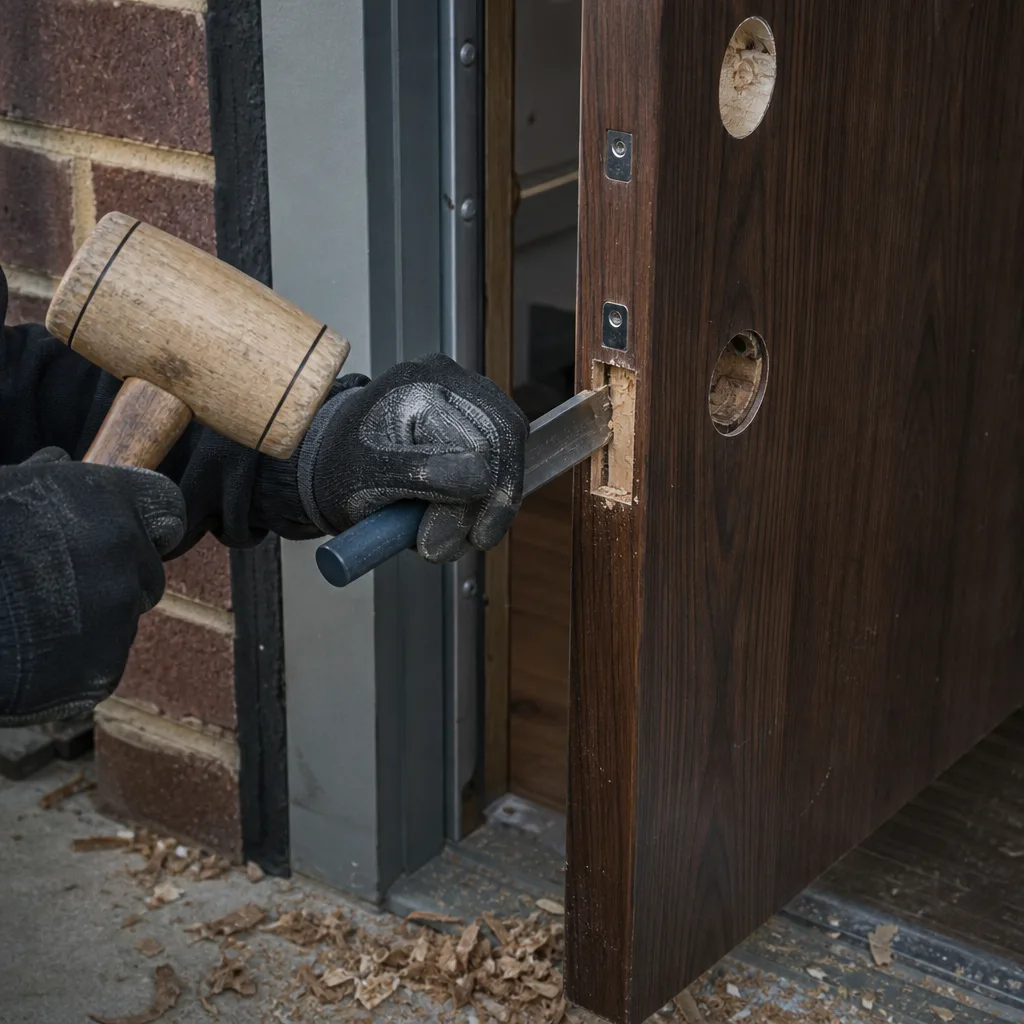
Call a factory-authorized commercial locksmith when you encounter cycle count exceedance, deadbolt misalignment that does not resolve with strike adjustment, electronic access control faults beyond battery replacement, any fire-rated hardware modification requirement, or any situation where warranty preservation matters. Novak Lock & Security Atlanta offers free estimates in Atlanta - call (470) 944-6813. We provide written scope and flat pricing before dispatch on all surveyed work, and our technicians are background-checked, uniformed, and working to The Haven Standard. Every visit includes a documented photo record left with you at completion.
Frequently Asked Questions
Quarterly inspection by a professional typically runs $150-$300 per visit for a standard commercial property with four to six doors, quoted in writing before we start. Annual deep inspection including access control audit adds $400-$800 depending on panel count and credential volume. We do not add a call-out surcharge; the price quoted on the phone is the price on the invoice, per Haven Standard Clause 1. Call (470) 944-6813 for an exact quote - estimates are free.
Yes. The price quoted by our dispatcher is contractually binding on the technician. This rule has been in place since 2002 and is the foundation the business was built on. The only price change permitted is if you request additional work after the technician arrives, and that change requires your written approval before proceeding.
Quarterly for exterior and high-traffic doors, annually for access control and panic hardware. Atlanta’s humidity and temperature cycling accelerate wear compared to drier climates; the ninety-day interval catches frame movement and corrosion before they cause failure.
If any lock installation, rekey, or repair is not done right, we make it right within one year at no charge. This applies to all work performed by Novak Lock & Security Atlanta, with no exclusion for parts or labor. The promise is documented on every invoice.
Basic visual inspection and operation testing are appropriate for in-house staff. Any work involving lock disassembly, cylinder removal, or fire-rated hardware adjustment should be performed by a trained technician. Incorrect reassembly of a commercial lockset can compromise security and void warranty coverage. For panic hardware and access control, professional service is required for code compliance and warranty preservation.
Locate the original purchase documentation or contact the manufacturer with the product series and installation date. Most commercial locksets carry a one- to five-year mechanical warranty, with extended coverage available if annual inspection by a qualified technician is documented. We verify warranty status as part of our maintenance survey and flag any hardware approaching coverage expiration.
The Bottom Line
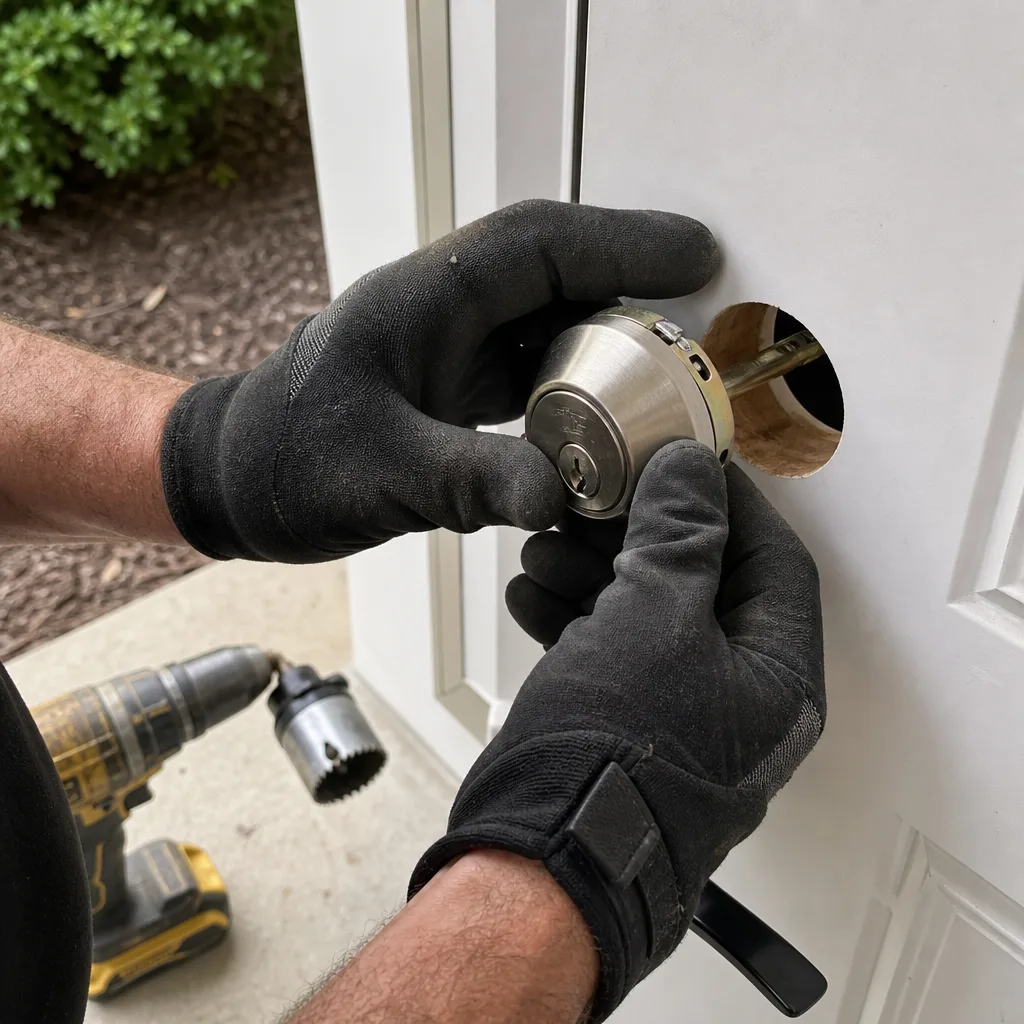
Commercial door hardware in Atlanta fails on a predictable schedule, but most properties are maintained on a reactive cycle. Reading your cycle ratings, inspecting quarterly for humidity and thermal effects, auditing credentials annually, and maintaining a documented inspection log eliminates emergency failures, satisfies lease obligations, and preserves manufacturer warranties. For more guides & resources, see our blog. The checklist in this guide gives you the structure. Execution is a calendar entry and a consistent procedure.
Written by Daniel Novak, Owner at Novak Lock & Security Atlanta, serving Atlanta since 2002.