
Last updated September 25, 2026
Non-destructive entry first, always - and we re-key Schlage, Kwikset, and Baldwin locks on the spot while you watch
You get a price before we start. It does not change when we arrive. No surprises.
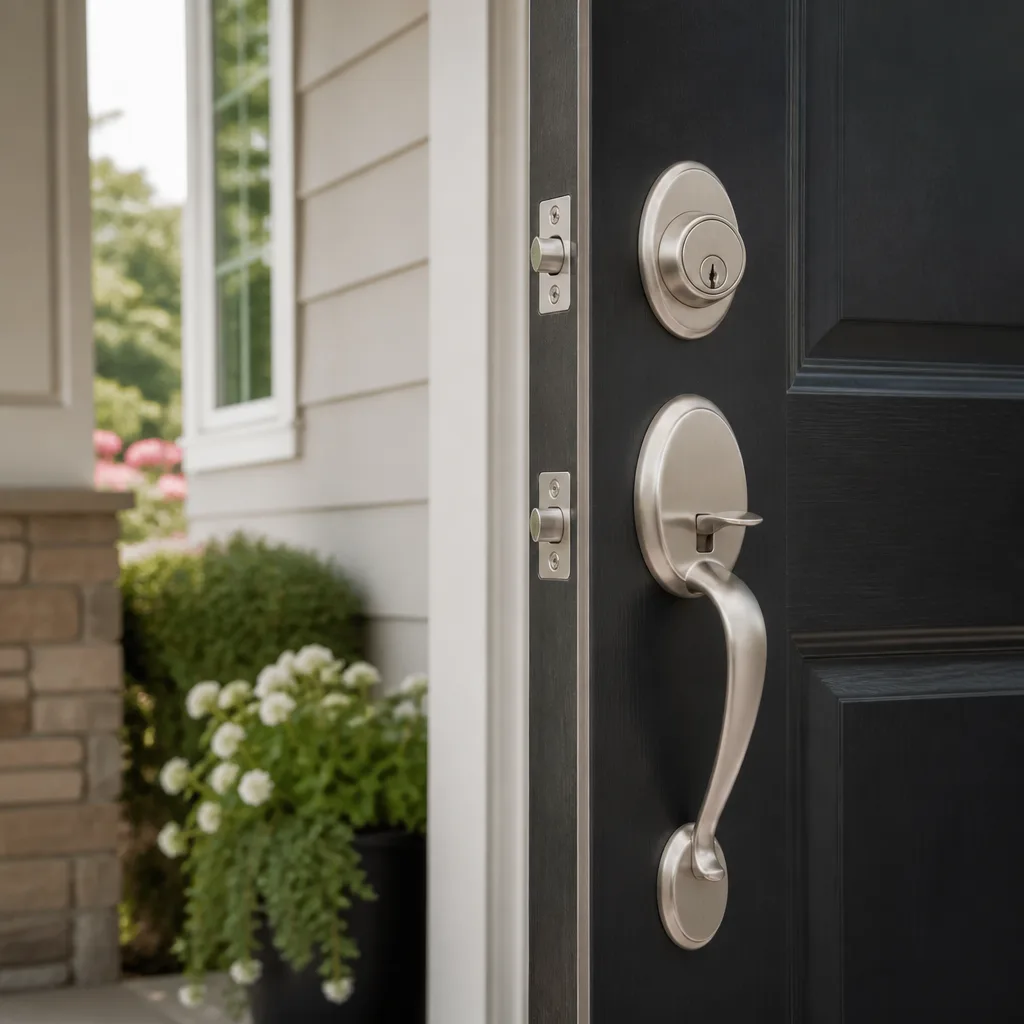
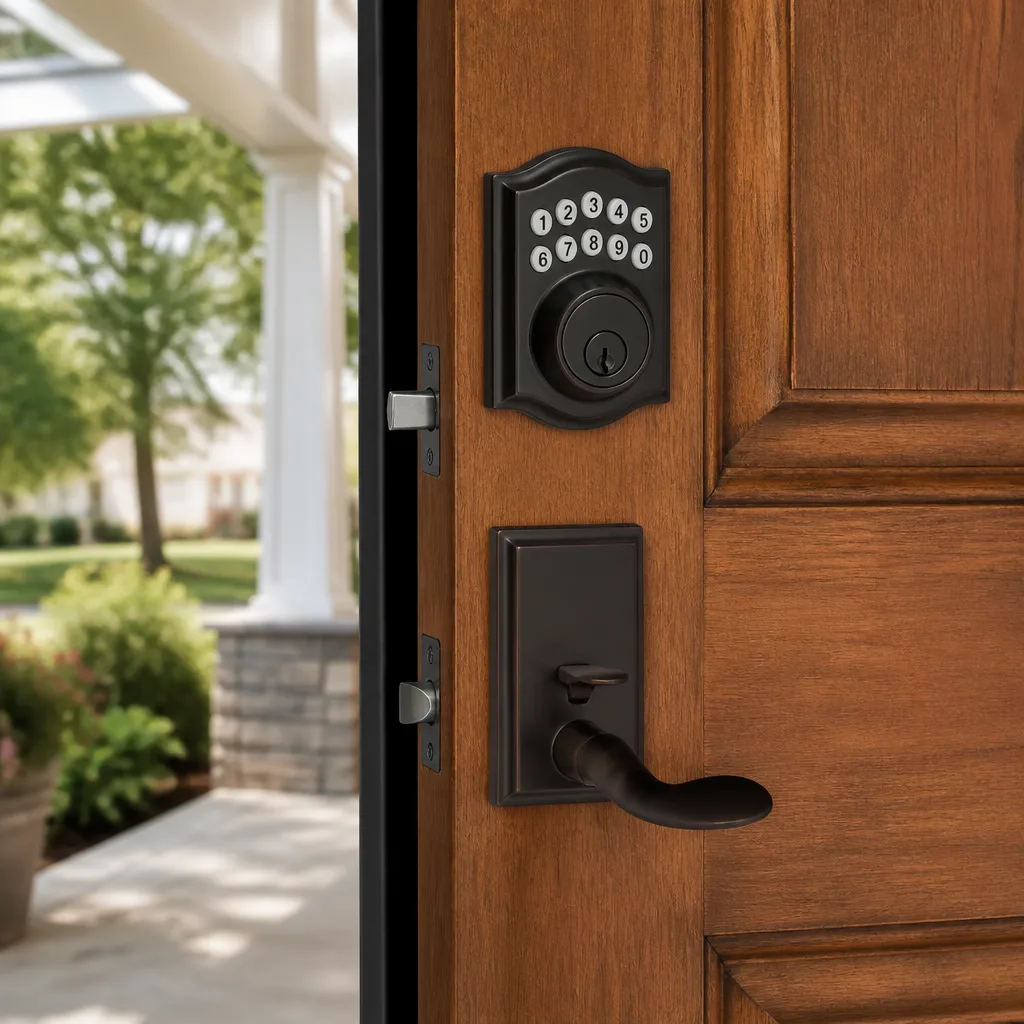
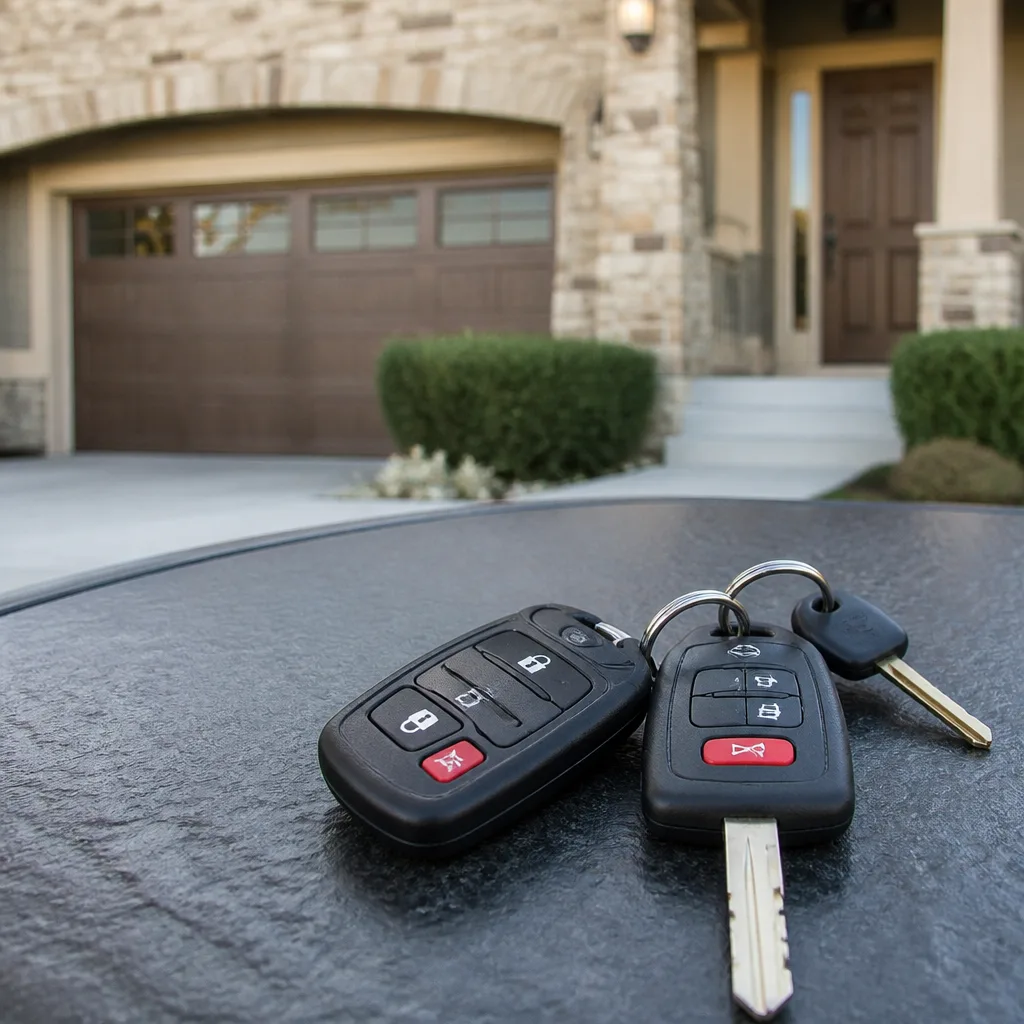
Seasonal Locksmith Care for Atlanta: Year-Round Homeowner’s Guide
Atlanta’s February freeze events are brief but destructive to lock cylinders: water infiltrates the keyway during rain, then expands overnight - a failure mode that almost never happens in colder climates because those locks are winterized, and Atlanta’s aren’t. We’ve replaced more cylinders after single-digit nights in Buckhead and Decatur than after entire winters in Chicago, where homeowners expect the cold and prepare for it. This guide - along with our Complete Guide to Locksmith in Atlanta - maps four distinct hardware stress windows created by Atlanta’s humid summers, pollen-soaked springs, intermittent hard freezes, and thermal-swung falls, assigning each a specific maintenance action so small problems don’t compound into emergency calls.
Quick Answer
Atlanta homeowners should perform lock maintenance four times yearly: spring pollen clearing with dry lubricant, summer strike-plate adjustment for thermally expanded steel frames, fall weatherstripping inspection to protect deadbolt throw, and winter freeze-proofing with graphite-based de-icer. Annual master key audits and documented key tracking complete the cycle. Most maintenance tasks take under 30 minutes; neglected locks fail most often during Atlanta’s February freeze events and July heat peaks.
Table of Contents
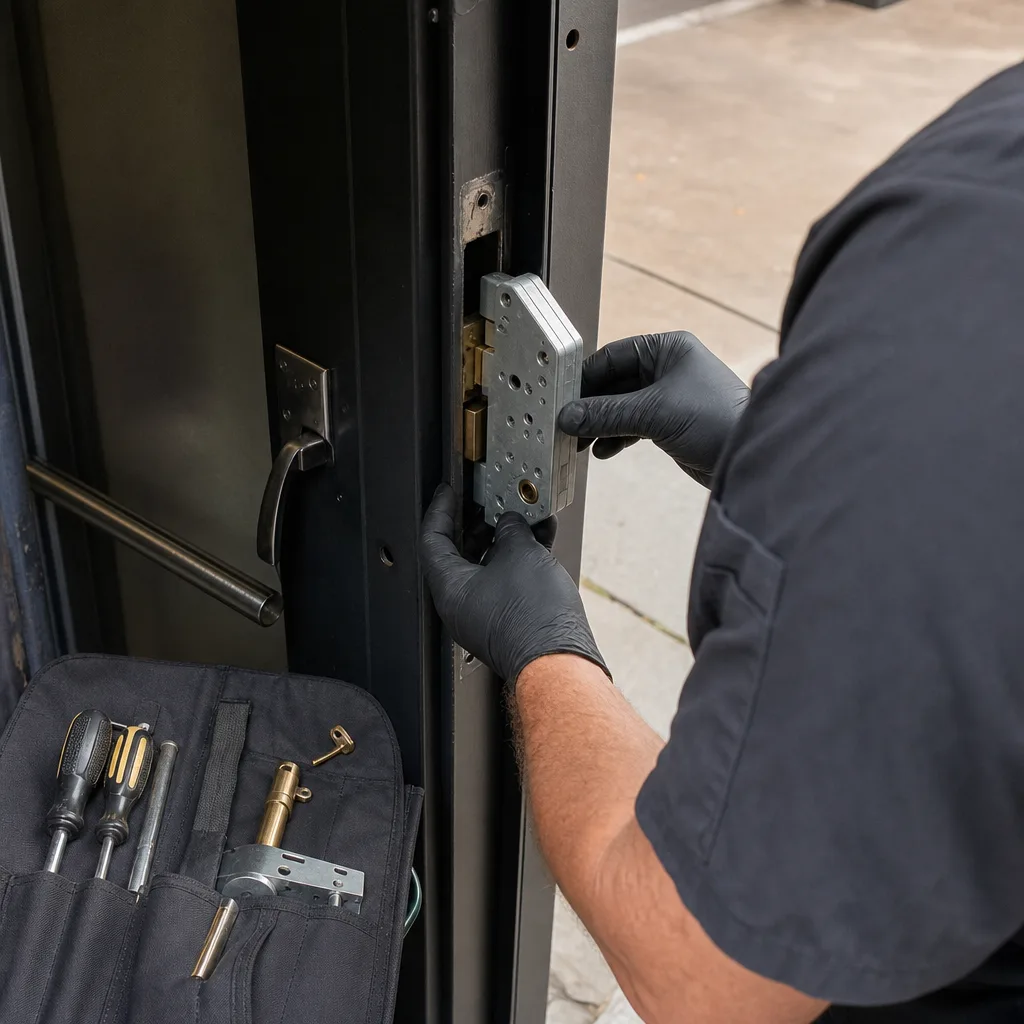
- Spring: Pollen Infiltration and Exterior Lock Maintenance
- Summer: Thermal Expansion and Steel Door Frame Adjustment
- Fall: Weatherstripping Condition and Deadbolt Throw Protection
- Winter: Freeze-Proofing Cylinder Internals in Atlanta’s Intermittent Cold
- Annual: Master Key System Audit and Key Documentation
- Common Mistakes to Avoid
- When to Call a Professional
- Frequently Asked Questions
Spring: Pollen Infiltration and Exterior Lock Maintenance
Atlanta’s pine pollen season runs roughly February through April, with peak counts often exceeding 3,000 grains per cubic meter. That yellow film isn’t just cosmetic - it’s abrasive, slightly acidic, and mechanically destructive when it works into lock cylinders and padlock shackles.
We’ve opened exterior padlocks in Inman Park and Virginia-Highland where the shackle was so caked with compacted pollen that the lock wouldn’t release even with the correct key. The pollen mixes with atmospheric moisture, forms a paste, and hardens. Standard WD-40 or oil-based lubricants make it worse: they attract more particulate and create a grinding compound that accelerates pin wear inside the cylinder.
The correct spring maintenance protocol:
- Remove visible accumulation. Wipe exterior surfaces with a dry microfiber cloth. Do not blow compressed air into the keyway - it drives particles deeper.
- Apply dry graphite lubricant to the keyway. Use a product specifically labeled “dry” or “graphite powder.” Insert the key, work it through the full rotation five to six times, then wipe excess from the blade. The graphite coats the pin tumblers without creating a sticky film.
- Exercise the deadbolt. Extend and retract the bolt fully ten times. This distributes lubricant and reveals binding that indicates misalignment.
- Inspect exterior padlock shackles. Apply a thin film of dry Teflon lubricant to the shackle body, then open and close the lock five times. Store padlocks used seasonally (sheds, gates) with shackles extended to prevent seizure.
For homes in Atlanta’s denser canopy neighborhoods - Druid Hills, Morningside, the older sections of Sandy Springs - this maintenance is non-negotiable. Tree cover increases pollen deposition by 40% or more compared to open-lot construction. We’ve documented this difference across thousands of service calls.
Spring is also the right window to evaluate whether your exterior locks are due for replacement. If a cylinder has been sticking despite proper lubrication, the pin chambers may be worn. Residential lock installation in Atlanta typically runs $145-$285 per door for grade-2 deadbolts (Schlage B60 series or equivalent), quoted in writing before we start. Haven Standard Clause 1 applies: the price on the phone is the price on the invoice.
Summer: Thermal Expansion and Steel Door Frame Adjustment
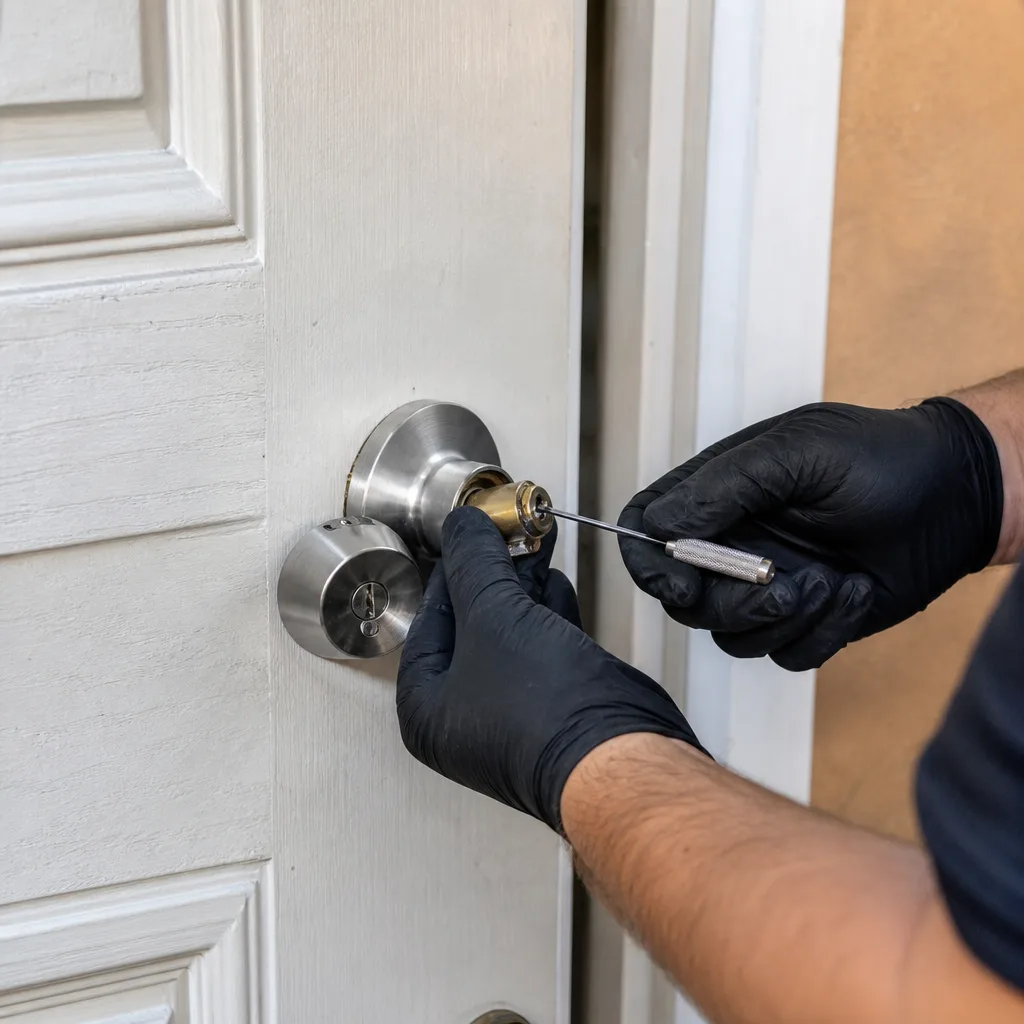
Atlanta’s July and August temperatures routinely push steel door frames to expand measurably. A standard 36-inch steel entry frame can expand 1/16 to 1/8 inch across its width during peak afternoon heat. That doesn’t sound like much until the deadbolt bolt no longer aligns with the strike plate mortise.
The symptom is specific: the door locks fine in morning cool, but by 3 PM the key won’t turn the final quarter-inch, or the thumb turn binds. Homeowners in East Atlanta and the Westside, where many 2005-2015 builds used lighter-gauge steel frames, report this most often. The frame expands; the strike plate stays fixed; the geometry shifts.
Full strike plate replacement is rarely necessary. The adjustment protocol:
- Confirm thermal binding. Test the lock at 8 AM and again at 4 PM on a day forecast above 90°F. If the problem is temperature-dependent, proceed.
- Mark the bolt contact point. Apply lipstick or carpenter’s chalk to the bolt face, close the door, and extend the bolt. The mark on the strike plate reveals where contact occurs.
- Enlarge the strike plate opening. Using a Dremel or file, remove 1/32 to 1/16 inch from the contact edge only. Test frequently - remove too much and the bolt loses engagement depth, compromising security.
- Verify engagement depth. The bolt must extend a minimum of one inch into the strike plate when fully thrown. Less than one inch is a security gap we document and report.
We do not recommend homeowners perform this filing on high-security deadbolts (Medeco, Mul-T-Lock, Abloy) or on fire-rated assemblies. Those installations require precise tolerances, and strike plate modification voids some manufacturer warranties. For these, we survey and adjust with factory-specified components.
Summer is also when Atlanta’s humidity peaks, and that moisture accelerates corrosion in older lock cylinders. If your key develops a reddish residue on its blade, the brass pins are oxidizing. The cylinder needs cleaning or replacement - graphite lubricant won’t reverse corrosion. Novak Lock & Security Atlanta home provides free estimates for cylinder evaluation; we quote the full scope and price before dispatch.
Fall: Weatherstripping Condition and Deadbolt Throw Protection
The connection most Atlanta homeowners never make: worn weatherstripping directly damages deadbolts.
When a door’s compression seal deteriorates, the door shifts in its frame. Gaps open. Wind pressure, especially during Atlanta’s fall frontal passages, pushes the door slightly ajar even when latched. The deadbolt bolt, extended to secure the door, now bears lateral load it was never designed to carry. Over a season, this bends the bolt, wears the strike plate, and in extreme cases cracks the bolt face where it meets the door edge.
We’ve replaced deadbolts in Grant Park and Ormewood Park where the bolt was visibly curved - not from forced entry, but from two years of wind-loaded operation against failed weatherstripping. The homeowners never noticed the draft; they noticed the key getting harder to turn.
Fall inspection protocol:
- Close the door on a sheet of paper. Pull the paper. If it slides out without resistance at any point around the frame, the seal has failed at that location.
- Inspect the deadbolt bolt for lateral wear marks. Scoring on the bolt’s top or bottom surface indicates it’s contacting the strike plate edge during extension - a sign of door shift.
- Check the strike plate screws. They should be 3-inch minimum, penetrating the door frame stud. Shorter screws pull out under wind load, allowing the strike plate to flex and the bolt to bind.
- Replace weatherstripping before the first hard freeze. Atlanta’s freeze-thaw cycles in December and January expand gaps that were merely drafty in October.
Weatherstripping replacement is a $15-$40 parts job most homeowners handle themselves. But if the deadbolt bolt shows wear or the door has shifted significantly, the lock geometry needs professional realignment. We quote that work in writing - typically $95-$175 for strike plate relocation and hardware adjustment, depending on frame material and accessibility.
Fall is also the optimal window to evaluate access control systems in Atlanta properties with multiple entry points. Before holiday tenant turnover or seasonal staffing changes, we audit credential lists, test strike release timing, and document which fobs or codes are active. Commercial properties in Midtown and the Perimeter corridor book these surveys in September and October to avoid year-end scheduling conflicts.
Winter: Freeze-Proofing Cylinder Internals in Atlanta’s Intermittent Cold
Atlanta’s freeze pattern is uniquely destructive: rain or heavy dew on Monday, 18°F by Wednesday morning. Locks that never see sustained cold aren’t winterized. Water enters through the keyway, condenses on internal components, and expands with force sufficient to crack brass pin chambers or jam the plug rotation.
The failure signature is unmistakable: the key inserts, turns a few degrees, then stops hard. Force it and the key shears, or the plug cracks. We’ve extracted broken keys from frozen cylinders in Reynoldstown, Candler Park, and Brookhaven after every significant freeze since 2002. The calls cluster in the 48 hours following the first sub-20°F night of winter.
Preventive protocol for Atlanta’s intermittent freeze climate:
- Apply graphite-based de-icer before the freeze. Products containing isopropyl alcohol and graphite (not oil) lower the freezing point of residual moisture and provide dry lubrication. Apply to the keyway 24 hours before forecast temperatures drop below 25°F.
- Never use standard de-icer with methanol or ethylene glycol in lock cylinders. These leave a residue that attacks brass and bronze components. We’ve replaced cylinders where methanol de-icer dissolved the anti-drill pins over two winters.
- Cover exterior padlocks with insulated shackle covers. For gates, sheds, and storage units, a $6 neoprene cover prevents direct ice formation on the shackle and body seam.
- After freeze events, exercise every exterior lock before full sun hits. If ice has formed, early-morning mechanical work breaks the bond before expansion pressure peaks.
If a cylinder is already frozen, do not pour hot water on it. The thermal shock cracks brass. Do not use a propane torch - the heat destroys internal springs and delaminates some cylinder plugs. The correct response is patience: warm the key with your hand, insert slowly, and wait for conductive heat transfer. If the lock doesn’t release in ten minutes, call for extraction before the key breaks - or review our DIY vs Professional Locksmith guide to decide your next step.
Winter emergency calls in Atlanta carry no surcharge at Novak Lock & Security. The dispatcher quotes the full price - typically $125-$195 for residential lockout with extraction, depending on cylinder type - and the technician is contractually prohibited from changing it at the door. Haven Standard Clause 1. We’ve operated this way since 2002.
Annual: Master Key System Audit and Key Documentation
Every property with more than two keys in circulation needs an annual audit. This applies to rental properties, multi-generational households, home offices with contractors, and any residence that has seen turnover - tenants, housemates, service providers, pet-sitters.
The audit isn’t about paranoia. It’s about knowing what exists. We’ve rekeyed homes in Decatur where the current owner possessed four keys and discovered, during our survey, that seven additional keys were unaccounted for from previous occupants, a property manager who left the state, and a contractor who never returned his copy.
Annual master key system audit protocol:
- Inventory all keys on hand. Lay them out, identify each by stamp or head marking, and photograph the collection.
- Trace each key to a specific lock. Test every key. Keys that don’t operate current locks are either obsolete or belong to a lock that was replaced without retiring the key.
- Document outstanding keys. For each key not physically present, record who holds it, when it was issued, and whether return is expected. If the holder cannot be reached, assume the key is uncontrolled.
- Rekey or replace based on risk, not assumption. If a key is unaccounted for and the lock is grade-2 or below, rekey. If the lock is grade-1 or high-security (Medeco, Mul-T-Lock, Abloy), key control may be sufficient - these systems use restricted keyways that cannot be duplicated without authorization.
For Atlanta rental properties, this audit aligns with Georgia’s security deposit and access laws, though no statute mandates specific key control. We recommend landlords schedule audits between lease terms, when cylinder access is unobstructed and tenant cooperation is guaranteed.
Master key system installation for typical Atlanta duplex or four-plex properties runs $340-$680 for Schlage or Kwikset-based systems, $890-$1,450 for high-security hierarchies with patented keyways. Commercial locksmith services in Atlanta for larger multi-tenant buildings are surveyed individually; we provide written scopes and flat per-lock pricing, not estimates that shift at installation.
The 365-Day Done Right Promise applies to every rekey and master key system we install. If a key doesn’t operate smoothly, if a cylinder binds, if the hierarchy doesn’t function as documented - we correct it without additional charge. Haven Standard Clause 4.
Common Mistakes to Avoid
- Using WD-40 in lock cylinders. It attracts pollen and dust, creating abrasive paste. We’ve disassembled cylinders where WD-40 residue had accumulated enough particulate to jam the plug entirely. Dry graphite only.
- Ignoring morning-only binding. If a deadbolt operates smoothly in afternoon heat but sticks at 7 AM, the frame is contracting overnight and misaligning the strike. This thermal cycling signal precedes permanent damage by one to two seasons.
- Replacing weatherstripping without checking strike plate depth. New compression seals often push the door outward slightly, reducing bolt engagement. Always verify one-inch minimum throw after weatherstripping replacement.
- Applying oil-based de-icer after freeze events. The residue remains through spring, collecting pollen and accelerating corrosion. Use graphite-based products exclusively.
- Failing to rekey after contractor access. In Atlanta’s active renovation market, we’ve found painter, flooring, and HVAC keys still circulating years after job completion. Rekeying costs less than one service call for a lockout caused by an unreturned key.
- Assuming all locks in a home are the same grade. Builders often install grade-3 hardware on secondary doors. These fail faster and provide minimal drill resistance. We identify grade during service calls and report the finding.
When to Call a Professional
Call when the key shears, when the cylinder rotates without retracting the bolt, when a lock has been rekeyed more than twice and still malfunctions, or when you cannot account for more than one outstanding key. These are not maintenance problems; they’re hardware failures or security gaps that compound with delay.
We also recommend professional survey for any home with mixed lock brands installed over multiple renovations - the interoperability problems (keyway conflicts, backset mismatches, strike plate incompatibilities) are not visible until a cylinder fails and replacement options are unexpectedly limited.
Novak Lock & Security Atlanta offers free estimates in Atlanta - call (470) 944-6813. The dispatcher will ask for lock types, symptoms, and property location, then quote a firm price. If you have a competitor’s written estimate, we provide a free second opinion review. Every visit includes a documented photo record and is performed by a background-checked, uniformed technician working to The Haven Standard.
Frequently Asked Questions
Professional seasonal maintenance - inspection, lubrication, and adjustment of all exterior cylinders and deadbolts - typically runs $125-$195 for a standard single-family home with three to four entry points. Rekeying adds $18-$32 per cylinder. We quote the full price on the phone before dispatch; the technician cannot change it at the door. Call (470) 944-6813 for an exact quote - estimates are free.
Yes. Haven Standard Clause 1: the price on the phone is the price on the invoice. This rule has been in place since 2002. The technician arrives with the quoted price in writing and is contractually prohibited from increasing it. If we discover additional needed work during the visit, we stop, explain the finding, and quote the additional scope separately - with your authorization required before proceeding.
Emergency lockout calls are answered by a live person 24/7, with no voicemail queue or callback window. Response time varies by traffic and weather conditions; during freeze events, we prioritize calls from homes with vulnerable occupants. The dispatcher provides an estimated arrival window when you call. There is no emergency surcharge.
Every Novak Lock & Security technician is background-checked and uniformed. We leave a documented photo record with you at job completion - not a promise, a procedure under The Haven Standard. Georgia does not require state-level locksmith licensing, but we maintain full general liability and workers’ compensation coverage, and we provide proof on request.
No. Electronic deadbolts (Schlage Encode, Kwikset Halo, and similar) have mechanical components that require light machine oil on the bolt mechanism, but the keypad and circuit housing must stay dry. Consult the manufacturer manual - many void warranties if graphite enters the electronic module. We service electronic and mechanical locks; call for specific guidance on your model.
Yes. Atlanta’s combination of high pollen, thermal expansion from heat, and intermittent hard freezes creates stress patterns not seen in consistently cold or dry climates. Locks in Minneapolis are winterized from installation; locks in Phoenix don’t experience thermal expansion binding from humidity-driven frame swelling. Atlanta’s hardware takes damage from all three factors, often in the same year. Our maintenance schedule reflects that specific risk profile.
The Bottom Line
Atlanta’s climate delivers four distinct hardware stress windows: spring pollen infiltration, summer thermal expansion, fall weatherstripping degradation, and winter freeze damage. Assign each window a specific maintenance task - dry lubrication, strike adjustment, seal inspection, freeze-proofing - and perform an annual key audit. Most tasks require under 30 minutes and basic supplies. Neglected locks fail predictably during the year’s temperature extremes, and those failures are always more expensive than prevention. For locks that bind, keys that stick, or security gaps you can’t quantify, Novak Lock & Security Atlanta quotes firm prices in writing and arrives with documented procedures. Explore more guides & resources on our blog.
Written by Daniel Novak, Owner at Novak Lock & Security Atlanta, serving Atlanta since 2002.