
Last updated September 25, 2026
Non-destructive entry first, always - and we re-key Schlage, Kwikset, and Baldwin locks on the spot while you watch
You get a price before we start. It does not change when we arrive. No surprises.
Locksmith Warning Signs: A Atlanta Homeowner’s Reference Guide
The $19 lockout service advertised across Atlanta is not a mistake or a limited-time offer. It is a legally defensible opening number, and the real charge typically arrives after the technician invents a “high-security lock” or “damaged wafer” diagnosis that adds $150 to $400 to the bill. In 23 years of serving Atlanta, we’ve documented the same playbook repeatedly, and the homeowners who avoid it are the ones who recognize the warning signs before the van arrives. This guide maps every stage of a bait-and-switch operation, from the Google ad to the doorstep, so you can stop the transaction before money changes hands. For the complete guide to locksmith services in Atlanta, including pricing standards and verification steps, see our overview.
Quick Answer
Legitimate locksmiths in Atlanta quote a firm, written price before dispatch and arrive in a marked vehicle with printed materials. For commercial locksmith maintenance checklist guidance for Atlanta homeowners, many of the same verification principles apply. Bait-and-switch operations use three specific ad phrases, refuse phone pricing, and invent hardware failures on-site to inflate the bill. If the technician cannot state the full price before work begins and put it in writing, the job should not proceed.
Table of Contents
- The Three Ad Phrases That Signal a Call-Center Operation
- What Legitimate Locksmiths Say on the Phone - and the Exact Deflections That Signal Trouble
- On-Site Warning Signs: The Van, the Invoice, and the Verbal Price
- The ‘Destroyed Lock’ Upsell: Real Failure vs. Manufactured Damage
- How Atlanta’s Neighborhood Architecture Affects Lock Vulnerability
- How to Document and Report a Locksmith Scam in Georgia
- Choosing a Legitimate Atlanta Locksmith: A Verification Checklist
- Common Mistakes to Avoid
- When to Call a Professional
- Frequently Asked Questions
The Three Ad Phrases That Signal a Call-Center Operation
Not every low-priced locksmith ad in Atlanta is a scam. But certain phrases appear with such consistency in documented consumer complaints that they function as reliable predictors. We have reviewed hundreds of Better Business Bureau filings and Georgia Attorney General complaints, and the same language recurs.
Phrase 1: “Service Call $19 and Up”
The “and up” is doing all the work. In Georgia, there is no legal requirement that advertised prices reflect the final charge, only that the starting price be available. A $19 service call covers the technician’s arrival. Every subsequent action, drilling, lock replacement, or “emergency after-hours fee” is priced separately and disclosed only after the technician is inside your home. In our experience, the median final bill from these operations in Atlanta runs $280 to $450 for a standard residential lockout that a legitimate locksmith would handle for $95 to $150, quoted in full before dispatch.
Phrase 2: “All Areas - 15-Minute Response”
Atlanta’s traffic patterns make this claim implausible during most waking hours. A technician genuinely based in Decatur cannot reach Buckhead in 15 minutes at 6 p.m. on a Thursday. The “15-minute response” indicates a dispatch center, not a local shop. Your call is routed to a national call center, which then broadcasts the job to independent contractors, often with minimal vetting. The person who arrives may have no fixed business address, no Georgia occupational license, and no insurance. We have responded to calls in Virginia-Highland and Inman Park where the customer had already paid one of these dispatched contractors and the lock remained unsecured.
Phrase 3: “Licensed and Bonded” Without a License Number
Georgia does not issue statewide locksmith licenses. Some municipalities, including the City of Atlanta, require a business license and may require an occupational license for locksmiths. The phrase “licensed and bonded” sounds authoritative but is often meaningless in this state. A legitimate Atlanta locksmith can tell you exactly which jurisdiction licenses them and provide that license number. A call-center operation will deflect or provide a number that belongs to a different business entirely.
What to do instead: Search for “[company name] Atlanta address” and verify that the business has a physical location you could visit. Check the Georgia Secretary of State’s business search to confirm the entity exists and is in good standing. At Novak Lock & Security Atlanta home, our shop location and business records are verifiable through both channels.
What Legitimate Locksmiths Say on the Phone - and the Exact Deflections That Signal Trouble
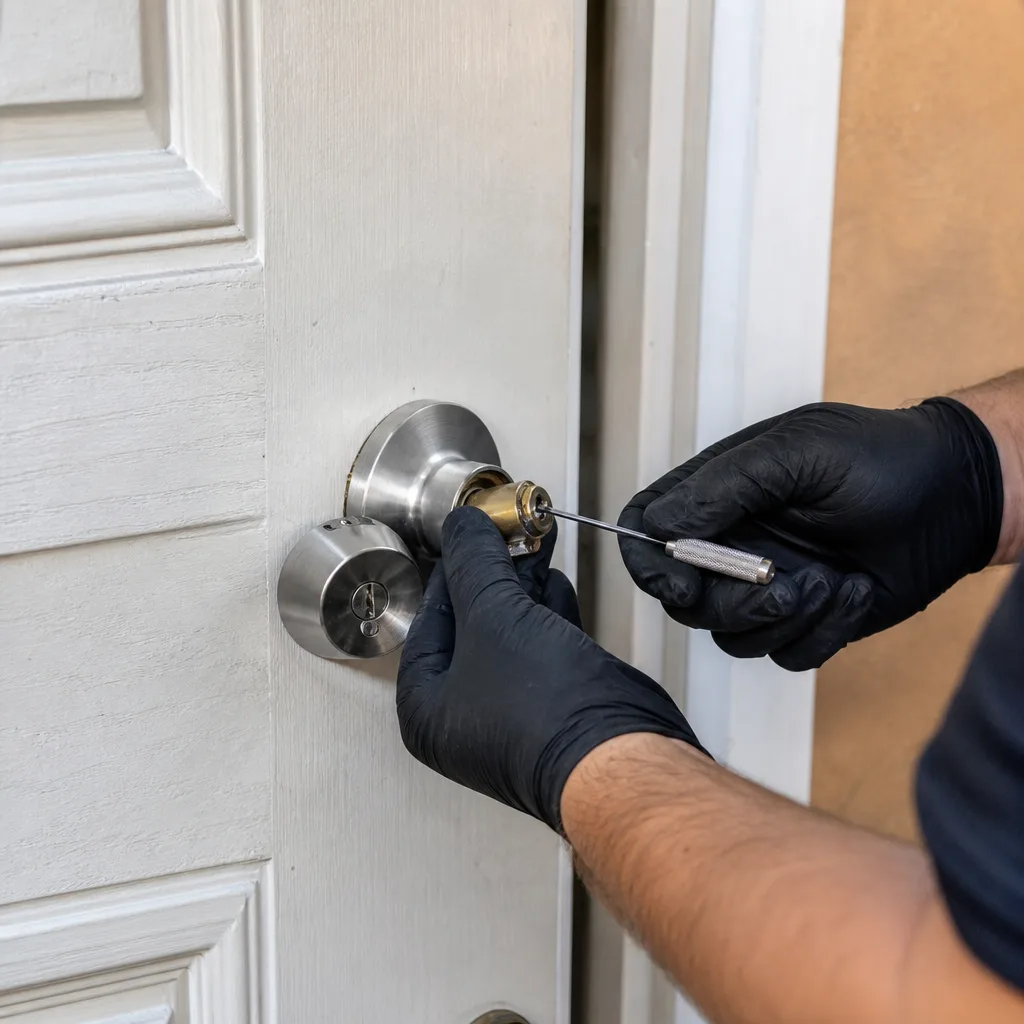
The phone call is where the bait-and-switch model is most vulnerable. A trained dispatcher can extract enough information to quote a firm price. The operations that refuse are protecting a business model, not a technical limitation.
What a Legitimate Atlanta Locksmith Asks and Offers
When you call Novak Lock & Security Atlanta, the dispatcher asks four questions: What type of lock? (brand and approximate grade, if known); What is the access situation? (locked out, key broken in cylinder, lock spinning, etc.); What is the address?; and When do you need service? From this, we quote a firm price that appears on the invoice verbatim. Haven Standard Clause 1 states: the price on the phone is the price on the invoice. Our technicians are contractually prohibited from changing it at the door. This rule has been in place since 2002.
Typical Atlanta pricing we quote by phone:
- Residential lockout (standard pin-tumbler deadbolt or knob): $95-$150, total
- Lock rekey per cylinder (Schlage, Kwikset, or equivalent): $25-$45 per cylinder, plus service call
- Broken key extraction: $85-$125
- High-security lockout (Medeco, Mul-T-Lock, Abloy): $150-$250, reflecting specialized tooling
The total is stated before the technician is dispatched. There is no arrival fee added later.
The Five Deflections That Indicate Bait-and-Switch
- “We can’t quote until the technician sees it.” A standard residential lock has visible specifications. The brand name is stamped on the face. The function (deadbolt, knob, lever) is apparent from the description. If the dispatcher cannot quote a lockout price for a named lock type, they are not a locksmith; they are a lead generator.
- “The technician will assess and give you options.” This frames the price as a discovery process rather than a commitment. In practice, the “options” are inflated prices delivered under time pressure, often with the claim that the lock is damaged and must be drilled.
- “It’s $19 to come out, then the technician will explain the rest.” The $19 is non-refundable and creates sunk-cost pressure. The technician then quotes $200+ for a procedure that should cost $100.
- “We have a flat rate, but there may be parts.” Every lockout requires parts if drilling occurs. The flat rate is meaningless if parts and labor are added opaquely.
- “Can I have your credit card to hold the appointment?” Legitimate locksmiths in Atlanta do not require prepayment for standard service calls. This practice is designed to make cancellation costly and to secure payment before the customer sees the technician or the price.
If you hear any of these five statements, end the call. The business model depends on getting a technician to your door; once there, the pressure tactics escalate.
On-Site Warning Signs: The Van, the Invoice, and the Verbal Price
The technician’s arrival is the point of no return in most bait-and-switch transactions. Homeowners who have already waited 45 minutes, often in a vulnerable situation, are less likely to refuse service or demand verification. The following observations, made before any work begins, separate legitimate operations from scams.
The Vehicle
A legitimate Atlanta locksmith arrives in a marked van or truck with the company name, phone number, and often license information visible. The vehicle is a rolling business record; it is how neighbors identify the service and how the company advertises locally. Unmarked vehicles, out-of-state plates, or personal vehicles with magnetic signs are common in dispatched-contractor operations. We have heard reports of technicians arriving in rental cars in Sandy Springs and Buckhead, with no company identification beyond a generic invoice pad.
The Documentation
Before touching your lock, the technician should provide a printed or digital work order with:
- The company name, address, and phone number
- A description of the work to be performed
- The total price, itemized if multiple services are involved
- A license or business identification number, where applicable
At Novak Lock & Security Atlanta, every visit includes a documented photo record, left with the customer at job completion. This is standard procedure, not an upgrade. The technician photographs the lock condition before and after work, the installed hardware, and the completed invoice. The customer receives copies. A technician who cannot produce printed materials, who writes prices on scrap paper, or who asks you to sign a blank form is operating outside any accountable system.
The Price Delivery
The critical moment is the price statement. A legitimate technician states the full price before beginning work and confirms it matches the phone quote. A bait-and-switch technician states a price verbally, often with escalating urgency: “This lock is high-security, so it’s more,” or “The cylinder is damaged, I have to drill it.” The price is not written until after the work is complete, and the invoice often bears a different company name than the one advertised.
Your authority: You are not obligated to proceed because a technician has arrived. If the price differs from the phone quote, or if the technician cannot produce written documentation before starting, you may decline service. You owe only the service call fee if one was legitimately disclosed, and even that is contestable if the business misrepresented itself.
The ‘Destroyed Lock’ Upsell: Real Failure vs. Manufactured Damage
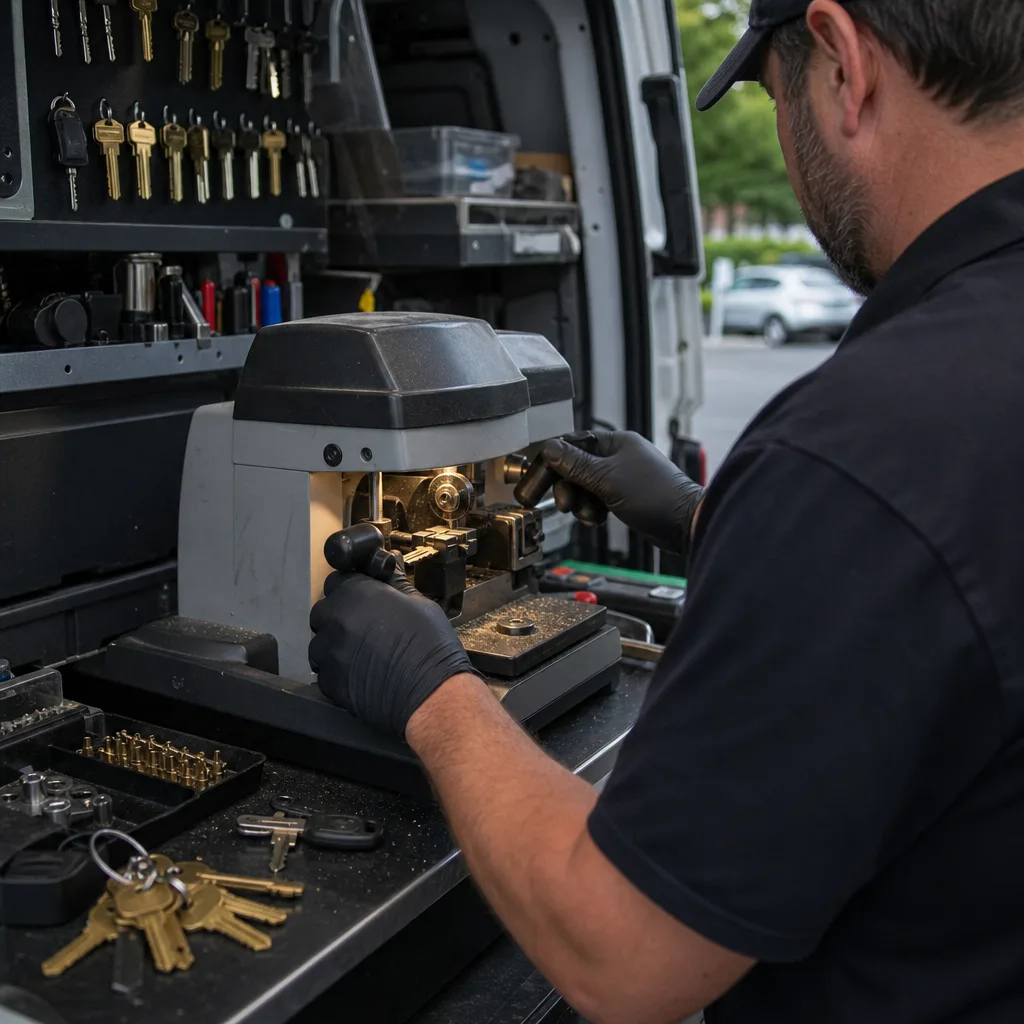
The most expensive bait-and-switch tactic is the claim that a lock has been damaged during entry and must be replaced. This upsell typically adds $200 to $600 to the bill, often for a lock that was functional before the technician touched it. Distinguishing genuine failure from manufactured damage requires understanding how locks fail and what a proper entry procedure looks like.
How Locks Actually Fail
Pin-tumbler locks, the standard in Atlanta homes built from 1985 onward, fail in predictable ways:
- Worn pins or springs: The key becomes difficult to turn or requires jiggling. This is gradual, not sudden.
- Broken tailpiece: The key turns but the bolt does not retract. The lock mechanism and cylinder are separate; the cylinder may be fine.
- Corroded internal components: Common in Atlanta’s humid climate, particularly on exterior gates and basement entrances. The lock feels gritty or seizes entirely.
- Forced-entry damage: Visible deformation of the faceplate, bent latch, or drilled cylinder. This is obvious and follows a break-in attempt.
A lock that functioned with the key yesterday and is described as “destroyed” after a routine lockout is suspect. Standard lock-picking, done correctly, does not damage a pin-tumbler cylinder. The tools manipulate pins individually; there is no force applied to the mechanism.
How Damage Is Manufactured
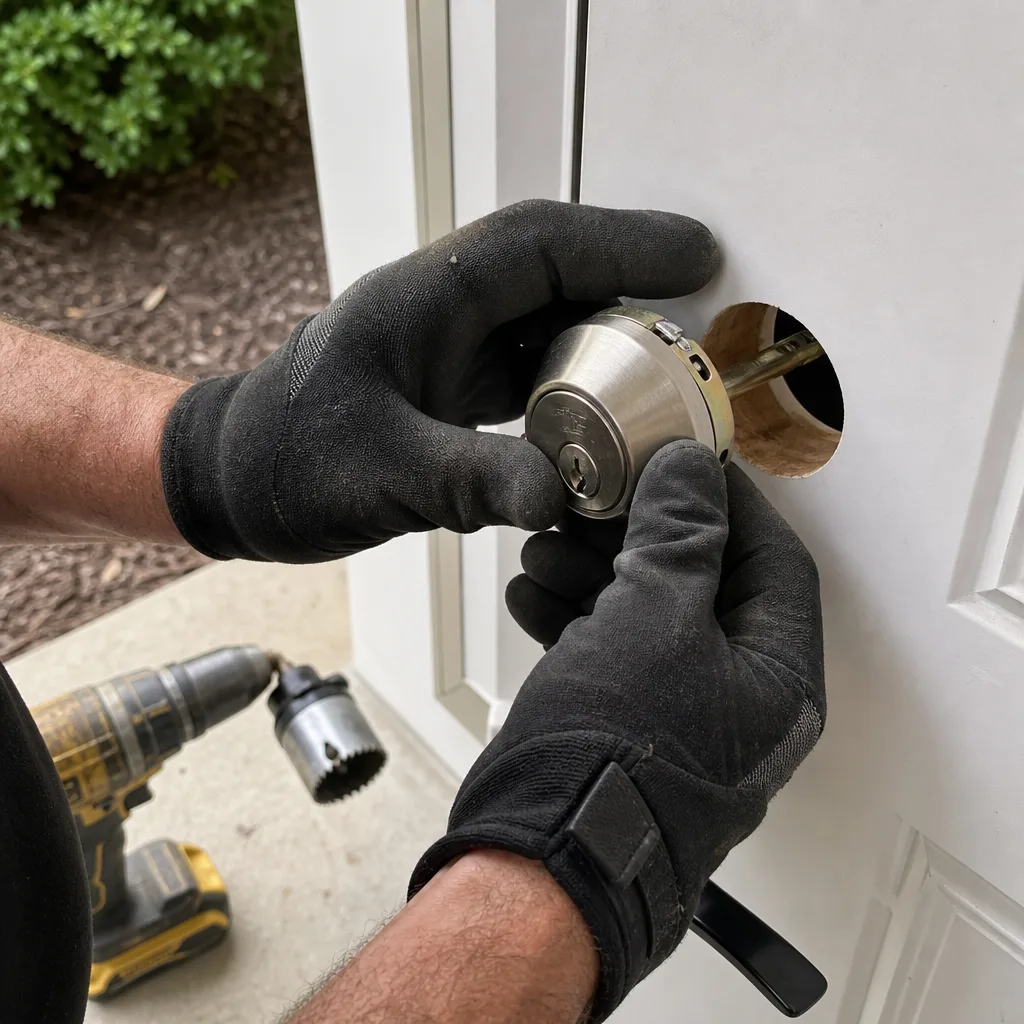
The bait-and-switch technician who cannot pick the lock, or who does not attempt to, may drill the cylinder immediately. Drilling destroys the lock and requires replacement. The technician then presents the drilled lock as evidence of pre-existing damage or claims it was necessary because the lock was “high-security” or “anti-pick.” In our experience, fewer than 5% of residential lockouts in Atlanta require drilling. The exceptions are high-security cylinders with sidebar mechanisms, such as certain Medeco and Mul-T-Lock models, which are disclosed by brand marking and are rarely found on standard residential entries.
What to observe: A legitimate technician attempts picking first, explains the process, and stops to discuss options before drilling. The decision to drill is yours, not the technician’s unilateral call. If drilling occurs without your explicit authorization, you are not obligated to pay for the destroyed lock or its replacement.
Verifying the Replacement Lock
If replacement is necessary, the technician should show you the new lock’s packaging, including the brand and grade. Atlanta homes typically have Grade 2 or Grade 3 residential hardware; Grade 1 is commercial and unnecessary for most residential applications. We install Schlage, Kwikset, Yale, and other specified brands at the customer’s request, with the grade and features described in writing before work begins. A technician who installs an unbranded lock or refuses to show packaging is likely installing $8 hardware from a hardware store and charging $200 for it.
How Atlanta’s Neighborhood Architecture Affects Lock Vulnerability
Atlanta’s housing stock varies dramatically by neighborhood, and the age and style of construction create distinct lock vulnerabilities that bait-and-switch operations exploit through misinformation. Our Seasonal Locksmith Care for Atlanta: Year-Round Homeowner’s Guide covers how weather and seasonality affect these vulnerabilities across neighborhoods.
In Virginia-Highland and Inman Park, the Craftsman bungalows built between 1910 and 1930 often retain original mortise locks or early pin-tumbler hardware. These locks are not “antique” or “irreplaceable” in most cases; standard modern cylinders can be retrofitted. But technicians may describe them as requiring specialized, expensive service. We have serviced hundreds of these homes and can specify in advance whether original hardware can be preserved or must be replaced.
In Midtown and Buckhead high-rises, many buildings installed Medeco or Schlage Primus high-security cylinders in the 2000s as part of master key systems. These locks are genuinely more complex to service and legitimately cost more to rekey or replace. The bait-and-switch operation may claim a standard Kwikset deadbolt is “high-security” and charge accordingly. Ask for the brand name; verify it against your building’s specifications.
In newer construction, particularly in West Midtown and the BeltLine corridor, builders often install contractor-grade Kwikset or Defiant hardware that meets minimum code but provides limited security. These locks are inexpensive to replace and trivial to rekey. A quote above $200 for rekeying three such locks is excessive unless the service includes additional security upgrades.
Atlanta’s humidity also accelerates corrosion on exterior hardware. Gate locks, pool equipment locks, and basement door locks in low-lying areas like parts of East Atlanta and Kirkwood may seize more frequently than in drier climates. This is genuine wear, not a reason to replace an entire door’s hardware.
How to Document and Report a Locksmith Scam in Georgia
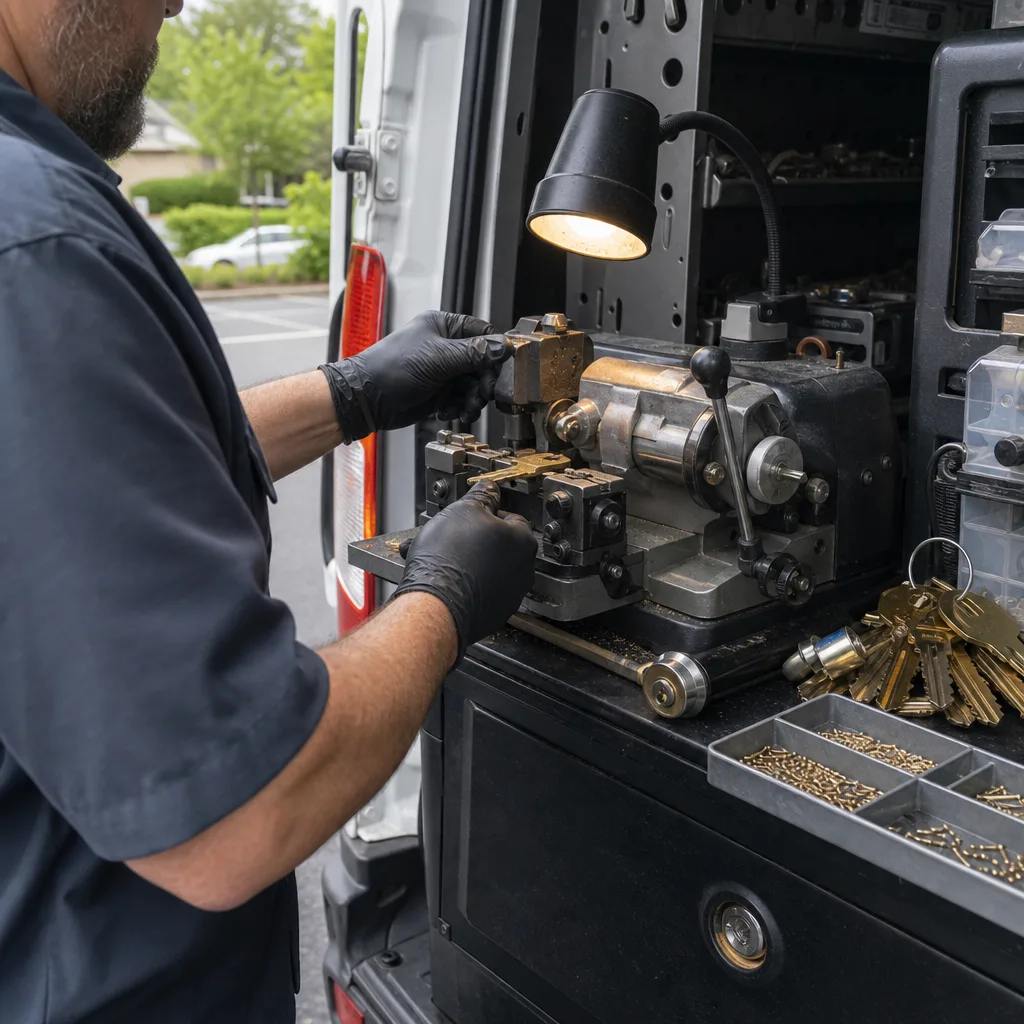
If you believe you have encountered a bait-and-switch locksmith operation in Atlanta, documentation is your most effective tool. Georgia’s consumer protection framework allows for complaints, but successful resolution depends on the quality of your record.
Step-by-Step Documentation
- Preserve all advertisements. Screenshot the Google ad, website, or flyer that brought you to the business. Note the phone number, the price stated, and any claims made.
- Record the phone call if legally permissible. Georgia is a one-party consent state for recording; you may record your own calls without notifying the other party. This captures the price quoted, or the refusal to quote.
- Photograph the technician and vehicle. Take clear images of the person, their clothing, the vehicle, and any license plates. This information is often critical in identifying the actual business entity.
- Request and retain all paperwork. Even a handwritten receipt is evidence. Note discrepancies between the business name on the ad, the phone answer, the invoice, and the technician’s identification.
- Photograph the lock before and after. If damage is claimed, document the condition yourself. If possible, have a second locksmith inspect and provide a written statement.
- Record payment details. Note the name on the credit card charge; it often differs from the advertised business name.
Where to Report
Atlanta Better Business Bureau: File a complaint at bbb.org. The BBB tracks patterns and can mediate resolution with businesses that maintain accreditation. Even non-accredited businesses receive complaint records that affect their rating.
Georgia Attorney General’s Consumer Protection Division: File at consumer.georgia.gov. The AG’s office investigates patterns of consumer fraud and can pursue enforcement action against repeat offenders. Include all documentation; the office prioritizes complaints with clear evidence.
Your credit card issuer: If payment was made by card, dispute the charge as “services not as described.” Provide your documentation. Card issuers often side with consumers when the merchant cannot produce a written authorization for the final amount.
Google Business Profile: Report fraudulent listings through Google’s business redressal form. Bait-and-switch operations frequently create multiple listings with different names but the same phone number; identifying these patterns helps remove them from search results.
Choosing a Legitimate Atlanta Locksmith: A Verification Checklist
Use this checklist before calling any locksmith in Atlanta. A “no” to any item is reason to continue searching.
- Does the business have a verifiable physical address in metro Atlanta, not just a P.O. box or no address?
- Does the website name the owner or principal technician, with a photo and background?
- Does the dispatcher quote a firm, total price for your described situation before dispatch?
- Does the business state that the phone price is guaranteed on the invoice?
- Are technicians described as background-checked and uniformed, with documentation provided?
- Does the business specify lock brands they install and service?
- Are reviews distributed across multiple platforms (Google, Yelp, BBB) with specific details about the work performed?
- Does the business offer a written warranty or guarantee, with specific terms?
At Novak Lock & Security Atlanta, we meet every item on this checklist. Our Residential Locksmith in Atlanta services include lock installation, rekeying, and emergency response, with pricing delivered in writing before any work begins. For businesses, our Commercial Locksmith in Atlanta services and Access Control Systems in Atlanta include surveyed appointments with written scopes and flat per-lock pricing, not dispatch-time estimates.
Common Mistakes to Avoid
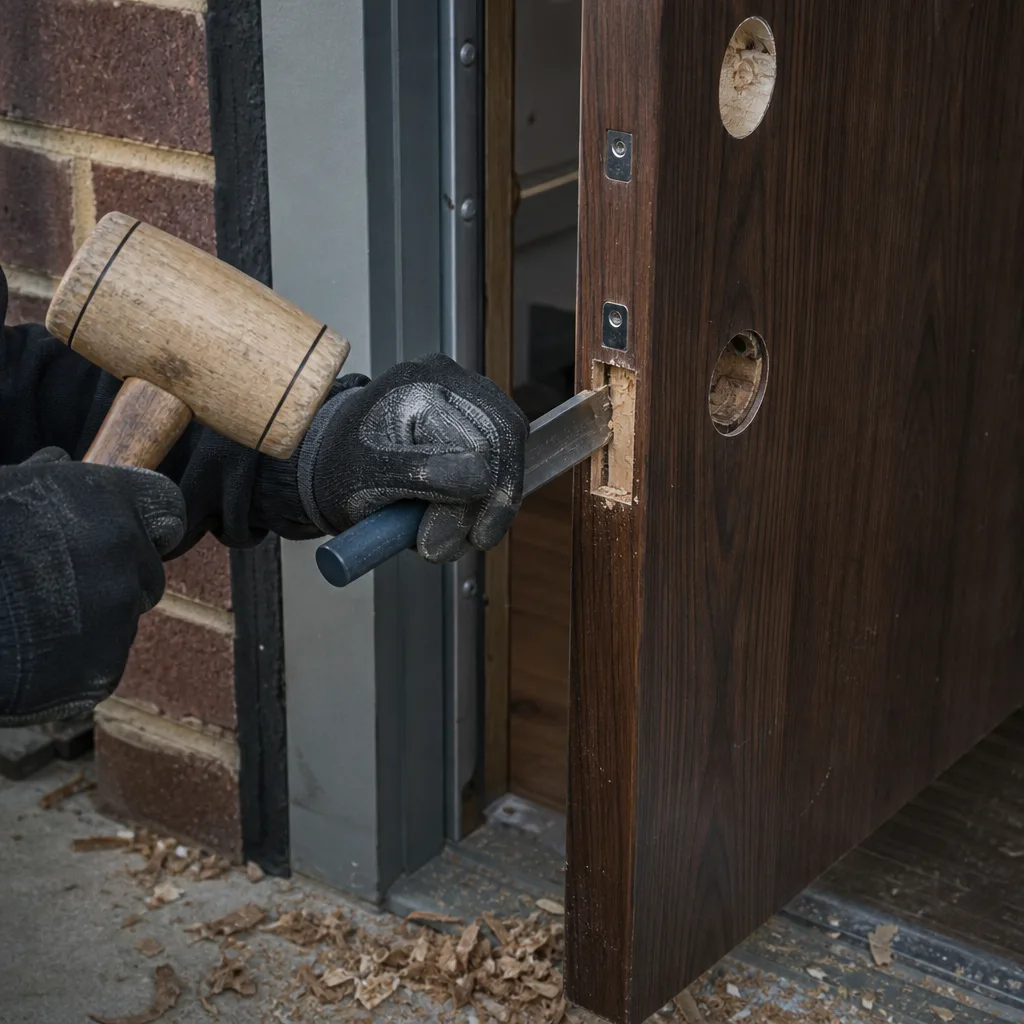
- Searching only for “locksmith near me” in a hurry. The top results are often paid ads from call-center operations. Take five minutes to verify the business name, address, and reviews across multiple platforms.
- Accepting verbal pricing as sufficient. A price stated only by voice can be changed. Insist on written confirmation, even by text or email, before the technician departs.
- Assuming a local phone number means a local business. VoIP numbers with Atlanta area codes are available nationwide. Verify the physical address independently.
- Paying cash to “avoid the service fee.” Cash transactions leave no record and are preferred by unaccountable operators. Credit cards provide dispute rights and create a paper trail.
- Allowing drilling without explicit authorization. Drarring destroys the lock and creates a replacement sale. If the technician cannot explain why picking failed and show you the obstruction, do not authorize drilling.
- Ignoring neighborhood-specific knowledge. A technician who does not recognize your Atlanta neighborhood or its typical housing stock may not be locally based. Ask about recent jobs nearby; vague answers suggest a dispatched contractor.
- Failing to check for a written warranty. Legitimate work includes documented terms. The 365-Day Done Right Promise at Novak Lock & Security Atlanta is governed by The Haven Standard and provided in writing on every invoice.
When to Call a Professional
Call a locksmith when you are locked out, when keys are lost or stolen, when moving into a new home, when a lock malfunctions, or when you need a security assessment. Browse our more guides & resources for additional homeowner security topics. In each case, the call should go to a verifiable, locally operated business that quotes firm pricing and documents its work.
Novak Lock & Security Atlanta offers free estimates in Atlanta. Call (470) 944-6813 to speak with a live dispatcher, 24 hours a day. We will ask about your lock, your situation, and your location, then quote a price that appears unchanged on your invoice. Every technician is background-checked, uniformed, and works to The Haven Standard. Every visit includes a documented photo record. Since 2002, we have installed or serviced over 60,000 locks, keys, and systems, each with a written price before we started and a documented record when we left.
Frequently Asked Questions
A standard residential lockout in Atlanta typically runs $95 to $150, quoted in full before dispatch. Lock rekeying is $25 to $45 per cylinder plus service call. High-security lockouts range from $150 to $250. Any quote significantly below these ranges, or refusal to state a total price, indicates a bait-and-switch operation. Call (470) 944-6813 for an exact quote; estimates are free.
At Novak Lock & Security Atlanta, yes. Haven Standard Clause 1 prohibits our technicians from changing the phone-quoted price at the door. The price on the phone is the price on the invoice, with no exceptions since 2002. If a locksmith cannot make this guarantee in writing, the price is not final.
Check for a physical address verifiable through the Georgia Secretary of State and Google Street View. Call the number and ask about a specific Atlanta neighborhood; a local operation can describe recent work there. Ask for the technician’s estimated travel time from their shop to your address during current traffic. Vague or implausible answers suggest a dispatch center.
Stop the work immediately. Photograph the lock before any further handling. Request the technician’s identification and business license information. Do not sign any document stating the lock was pre-damaged. Contact a second locksmith for an independent inspection, then file a complaint with the Atlanta BBB and Georgia Attorney General’s office with your documentation.
Rekeying is sufficient in most cases. It renders old keys inoperative at a fraction of replacement cost. Replacement is advisable only if the locks are damaged, below Grade 2 security, or incompatible with your preferred keying system. In Atlanta’s older neighborhoods like Grant Park or Cabbagetown, some original hardware may have historical value worth preserving through rekeying rather than replacement.
High-security locks are branded: Medeco, Mul-T-Lock, Abloy, Schlage Primus, and certain Yale models display the brand name on the cylinder face. They have additional security features like sidebars, rotating pins, or hardened inserts that resist picking and drilling. A standard Kwikset or Schlage deadbolt without these markings is not high-security, regardless of what a technician claims. If you are unsure, text a photo to (470) 944-6813 and we will identify it at no charge.
The Bottom Line
Bait-and-switch locksmith operations in Atlanta follow a recognizable pattern: the too-low advertised price, the refusal to quote by phone, the unmarked vehicle, the verbal price escalation at the door, and the sudden discovery of catastrophic lock damage. Each stage has warning signs that an informed homeowner can identify and act upon. The power to stop these transactions lies in the phone call, before the technician is dispatched. Demand a firm, written price. Verify the business address and licensing. Observe the vehicle and documentation on arrival. And never authorize drilling or replacement without understanding why it is necessary and what it will cost. A legitimate locksmith has nothing to hide and will document everything. A scam operation depends on your urgency overriding your judgment. Slow down, verify, and choose a business that puts its name on the van and its price in writing.
Written by Daniel Novak, Owner at Novak Lock & Security Atlanta, serving Atlanta since 2002.