
Last updated September 25, 2026
Non-destructive entry first, always - and we re-key Schlage, Kwikset, and Baldwin locks on the spot while you watch
You get a price before we start. It does not change when we arrive. No surprises.
Locksmith Permits, Codes & Inspections in GA: What You Need to Know
Georgia is one of only a handful of states with no mandatory locksmith licensing - which means the person rekeying your office building may hold zero verified credentials, and nothing in the hiring process will tell you otherwise unless you ask the right questions. In Atlanta, this gap matters more than most homeowners realize. We’ve opened doors in Inman Park bungalows and Midtown high-rises where the lock hardware was installed by someone with no permit, no inspection, and no liability coverage. When those properties sell, the unpermitted work surfaces on the inspection report. This guide explains exactly which lock installations trigger City of Atlanta permits, what fire code requires for commercial egress hardware, and how to verify a contractor’s compliance history before you hire. For Locksmith Warning Signs: A Atlanta Homeowner’s Reference Guide, see our companion resource.
Quick Answer
Georgia does not require locksmiths to hold a state license, but specific lock and door hardware installations in Atlanta are subject to City of Atlanta building permits and fire marshal inspection. Residential lock changes and rekeys typically do not require permits. Commercial door hardware modifications, panic bar installations, access control systems, and any work affecting fire-rated assemblies must comply with the International Building Code as adopted by Atlanta and may require permit and inspection. Unpermitted work is flagged during real estate transactions and must be remediated before closing.
Table of Contents
- Georgia Has No State Locksmith License - What That Actually Means
- Which Lock Installations Require a City of Atlanta Building Permit?
- Fire Code Requirements for Egress Hardware in Fulton and DeKalb Counties
- Access Control Systems and Low-Voltage Permitting
- How Unpermitted Lock Work Surfaces During a Home Sale
- The Difference Between a General Contractor and a Locksmith Contractor
- How to Verify Permit Compliance in Atlanta
- What Novak Lock & Security Documents on Every Job
Georgia Has No State Locksmith License - What That Actually Means
Twenty-two states require locksmiths to carry a state-issued license. Georgia is not among them. There is no state board, no continuing education requirement, no bond minimum, and no criminal background check mandated by law before someone can advertise locksmith services in Atlanta or anywhere else in the state.
What exists instead is a patchwork of local and private verification systems:
- City of Atlanta business license: Required to operate any business within city limits, but this is a tax registration, not a trade credential. It does not verify training, insurance, or competency in lock work.
- County sheriff’s card (some jurisdictions): Fulton and DeKalb counties have at times required locksmith employees to register with the sheriff’s office and submit to a background check. Requirements change; verify current status with the county directly.
- Private certifications: Associated Locksmiths of America (ALOA) offers voluntary certifications (Certified Registered Locksmith, Certified Professional Locksmith, Certified Master Locksmith). These are meaningful credentials held by trained technicians, but they are not legally required.
- Trade organization membership: Membership in ALOA or the Safe and Vault Technicians Association (SAVTA) indicates professional commitment but carries no regulatory weight.
The practical result: any individual with a van and a drill can legally perform most residential lock work in Atlanta. The consumer’s only protection is due diligence. We have encountered rekey jobs in Virginia-Highland where the previous technician installed Schlage cylinders backward, rendering the keyway inoperable from one side. In Old Fourth Ward, we found a Baldwin deadbolt installed without the strike plate reinforcement, leaving a 3/4-inch gap between the bolt and the jamb. No state agency tracked either technician. No recourse existed for the homeowner except hiring someone competent to redo the work.
For consumers, the absence of state licensing shifts the burden entirely to verification. Ask for proof of general liability insurance (minimum $1 million is standard for commercial work). Ask for a business license issued by the City of Atlanta or relevant municipality. Ask for references from jobs completed in your neighborhood. And ask whether the technician can identify when a permit is required - a locksmith who does not understand permitting is a locksmith who does not understand code compliance. Our Seasonal Locksmith Care for Atlanta: Year-Round Homeowner’s Guide covers additional maintenance questions worth asking.
Which Lock Installations Require a City of Atlanta Building Permit?
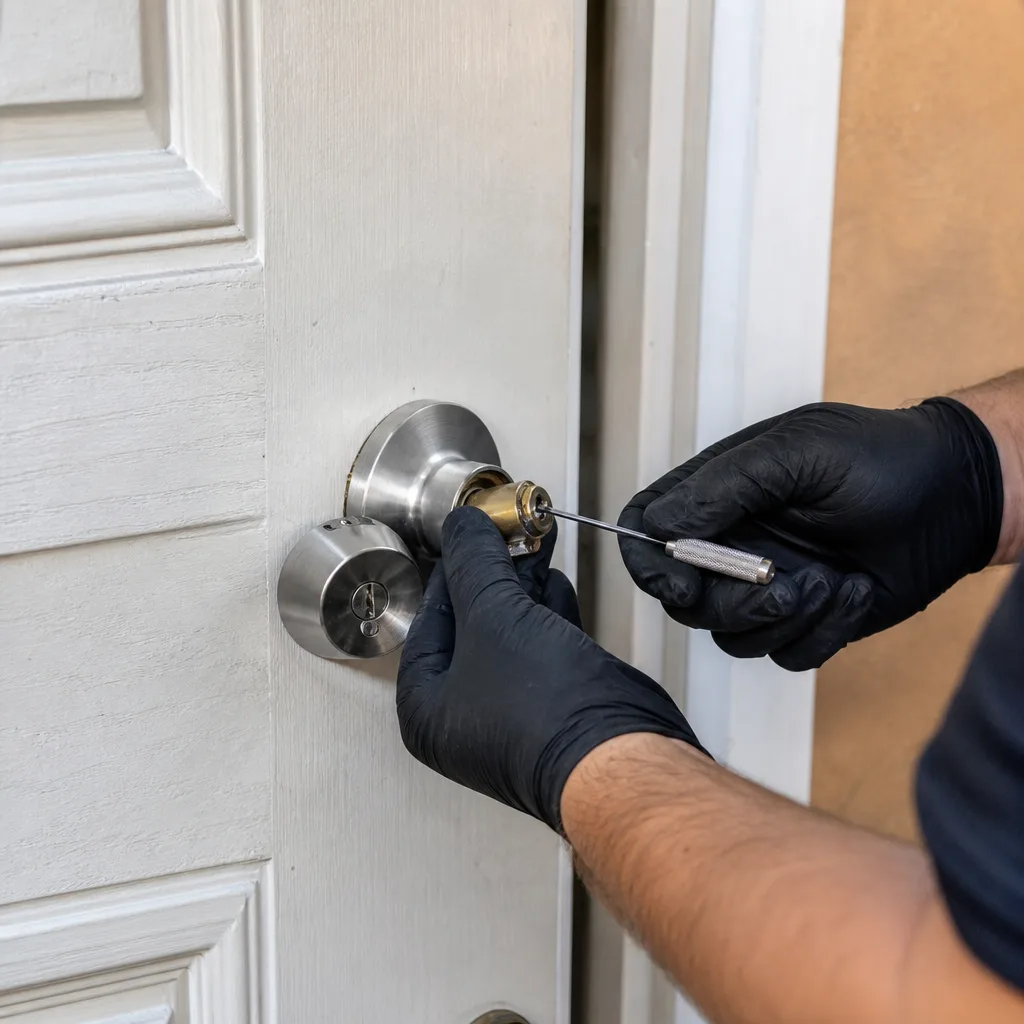
The City of Atlanta Building Code, based on the International Building Code (IBC) 2018 with local amendments, governs when a permit is required for door hardware modifications. The determining factor is not whether a lock is being changed, but whether the work affects life safety, fire ratings, or structural integrity.
Residential work - typically no permit required:
- Rekeying existing locks (changing the internal pin configuration so old keys no longer operate)
- Replacing a deadbolt or knob set with a functionally identical unit on the same door
- Installing a new lock on a non-fire-rated interior door
- Smart lock installation where no door modification exceeds standard prep dimensions
Residential work - permit may be required:
- Installing a new door where none existed (framing, header, structural modification)
- Modifying a fire-rated door or frame (most garage-to-house doors are fire-rated; many homeowners do not know this)
- Installing hardware that affects egress, such as double-cylinder deadbolts (key required on both sides) on required exit doors - these are prohibited on sleeping room exits by the International Residential Code
- Any work in a historic district requiring review by the Atlanta Urban Design Commission
Commercial work - permit typically required:
- New panic bar or crash bar installation on any door designated as a required means of egress
- Delayed-egress devices (electromagnetic locks that release after 15 or 30 seconds)
- Electric strike modifications to fire-rated frames
- Access control system installation affecting egress paths
- Door closer replacement on fire-rated doors (the closer is part of the fire assembly)
- Any modification to a fire door assembly, including hinge replacement with non-listed hardware
In our experience serving commercial clients from Buckhead office towers to East Atlanta Village retail strips, the most common permit-triggering scenario is panic bar installation or replacement. See our Commercial Locksmith Maintenance Checklist for Atlanta Homeowners for a full compliance review protocol. A business owner replacing a worn Von Duprin 99 series with a new unit on the same door may assume it’s a simple swap. If the door is a rated egress door, the new hardware must be listed for that specific fire rating, installed per the manufacturer’s listing, and inspected. The City of Atlanta requires a building permit for this work, and the fire marshal’s office conducts the inspection.
Permit costs vary by project value. As of recent years, the City of Atlanta building permit fee structure starts with a base fee plus valuation-based increments. A simple panic bar replacement permit might run $150-$300 in total fees. The penalty for unpermitted work is typically 200% of the original permit fee plus required inspection fees, and work must be brought to code.
Fire Code Requirements for Egress Hardware in Fulton and DeKalb Counties
Fire code for door hardware in metro Atlanta is enforced at the county level, with Fulton and DeKalb each maintaining fire marshal offices that interpret the International Fire Code with local amendments. The rules are specific, technical, and carry legal weight - incorrect installation can result in occupancy violations, fines, or liability in the event of an emergency.
Panic bars and exit devices:
Any door serving as a required means of egress in an assembly, educational, or high-occupancy commercial building must have panic hardware (push-bar style exit devices) if the occupant load exceeds 50 people. The device must be listed by UL or another approved testing laboratory for the specific fire rating of the door assembly. In Fulton County, the fire marshal’s office verifies this listing during inspection. We have seen installations in Decatur commercial buildings where a generic panic bar was substituted for a listed model to save $80; the fire marshal red-tagged the door and required complete replacement plus re-inspection at additional cost.
Delayed-egress devices:
These electromagnetic locks hold a door closed for 15 seconds (or 30 seconds in some healthcare applications) after someone attempts egress, then release automatically. They are permitted only under strict conditions:
- The building must have an automatic sprinkler system or automatic fire detection system
- The delay timer must release immediately upon fire alarm activation
- Signage must read “PUSH UNTIL ALARM SOUNDS - DOOR CAN BE OPENED IN 15 SECONDS” in letters at least 1 inch high
- The device must be connected to the fire alarm system, not standalone
- Installation requires both building permit and fire marshal approval in Atlanta
We do not install delayed-egress devices as standalone projects. The integration with fire alarm systems requires coordination with a licensed fire alarm contractor, and the permitting pathway is complex enough that we coordinate directly with the project’s general contractor or building engineer. For commercial locksmith in Atlanta projects involving egress modifications, we provide written scope documentation that the GC can submit with their permit package.
Magnetic locks (mag-locks):
Electromagnetic locks are treated with particular scrutiny. The IBC requires that mag-locks on egress doors release by one of three methods: fire alarm activation, power failure, or a dedicated push button at the door. In DeKalb County, the fire marshal requires all three methods for certain occupancy types. The push button must be clearly labeled, within 5 feet of the door, and designed so that a single motion releases the lock. We have replaced mag-lock installations in Brookhaven office parks where the release button was mounted at reception, 40 feet from the door - a configuration that failed inspection and required rewiring.
Who can certify egress hardware:
The fire marshal’s inspection is the legal certification. No private locksmith can “certify” a fire door assembly for code compliance. What a qualified locksmith can do is install listed hardware per manufacturer specifications, provide documentation of the listing, and prepare the assembly for inspection. At Novak Lock & Security Atlanta, we leave a written installation record with every panic bar and exit device job, including the UL listing number, door rating, and frame condition - the documentation the fire marshal expects to see.
Access Control Systems and Low-Voltage Permitting
Access control systems - card readers, biometric scanners, electric strikes, and the controllers that manage them - occupy a regulatory gray area that surprises many Atlanta property managers. The locks themselves may not require a permit if they are standalone battery-operated units. The moment the system involves hardwired power, low-voltage signaling, or integration with building systems, permitting requirements activate.
City of Atlanta electrical permit:
Any new electrical circuit serving access control equipment requires an electrical permit pulled by a licensed electrical contractor. This includes power supplies, transformer installations, and new conduit runs. The locksmith cannot legally perform this work unless they also hold an electrical contractor’s license. In practice, many access control systems in Atlanta are installed by teams that include both trades, or by electrical contractors subcontracting lock hardware to a locksmith.
Low-voltage/communications permit:
Some jurisdictions classify access control wiring as low-voltage work requiring a separate permit. Atlanta’s requirements have shifted over years; verify current classification with the Office of Buildings. The key point for property owners: if your access control installer cannot produce a permit for the wiring work, the installation may be unpermitted.
Fire alarm integration:
When access control releases are tied to fire alarm systems - as they must be for mag-locks and delayed-egress devices - the fire alarm contractor must perform or supervise the connection. This is not optional. The fire marshal will inspect the integration during the final fire alarm acceptance test. We coordinate with fire alarm contractors on these integrations, providing the lock side release specifications and receiving the alarm side trigger confirmation in writing.
What we document for access control:
Every access control installation we perform includes a written scope, a single-line diagram of the lock hardware and power path, and photographs of the controller mounting and wire terminations. This documentation serves two purposes: it satisfies our internal Haven Standard documentation requirements, and it provides the property owner with evidence of professional installation if questions arise during sale, insurance review, or code enforcement inspection.
How Unpermitted Lock Work Surfaces During a Home Sale
The moment unpermitted work becomes expensive is typically not during installation. It is during the real estate transaction, when a buyer’s inspector or the closing attorney’s title search reveals gaps in the permit history.
How it gets flagged:
Atlanta-area home inspectors are trained to identify modifications to fire-rated doors and required egress paths. A garage-to-house door with a non-rated deadbolt, a basement bedroom with a double-cylinder deadbolt (requiring a key to exit), or a new exterior door with no visible permit history - these are standard inspection items. The inspector notes them; the buyer’s lender may require correction; the seller must remediate or accept a price reduction.
In our experience, the most common unpermitted lock issue in Atlanta residential sales is the modified fire door. Garage-to-house doors are required to be 20-minute fire-rated in most configurations. Homeowners who install a pet door, replace the deadbolt with an unlisted smart lock, or modify the frame for a new lockset without maintaining the fire rating have created a code violation. The correction typically requires: door replacement with a new fire-rated unit, proper hardware installation, and in some cases, permit application retroactively plus inspection. Total cost: $800-$2,500 depending on door size and hardware selection, plus permit fees and potential delay of closing.
The permit history search:
Savvy buyers and their agents now search the City of Atlanta’s online permit portal (Accela Citizen Access) for property history. A clean permit record for a kitchen renovation but no permit for the clearly new rear door with fresh hardware raises questions. In competitive intown markets like Grant Park or Reynoldstown, where buyers have leverage, this can become a negotiation point.
Insurance implications:
Some insurers now review permit compliance for commercial properties, particularly after losses. An access control system that contributed to delayed egress during an emergency, installed without permit or inspection, becomes evidence in liability determination. We have been called to document existing installations for insurance reviews - easier when the original installer left a paper trail, impossible when they did not.
The preventive step is simple: for any lock installation that might trigger code, ask the contractor whether a permit is required and who will pull it. If they do not know, they are not the right contractor. If they say it is never required for lock work, they are incorrect. If they say they will handle it, verify the permit number before final payment.
The Difference Between a General Contractor and a Locksmith Contractor
Georgia’s contractor licensing system, administered by the Georgia State Licensing Board for Residential and General Contractors, creates a distinction that matters for permitted lock work.
General Contractor (GC):
A licensed residential or general contractor can perform or subcontract all trades on a project and can pull permits for the full scope. This includes lock hardware as part of a larger renovation. However, most GCs subcontract lock work to specialists, and the GC’s permit covers the project, not necessarily the specific lock installation details. If you hire a GC for a full office buildout, the lock hardware is likely permitted under their umbrella. If you later need a panic bar replaced, the original GC permit does not cover that subsequent work.
Locksmith contractor:
There is no “locksmith contractor” license category in Georgia. A locksmith operating as a sole proprietor or LLC performs work under their business license, not a trade-specific contractor’s license. This means:
- They cannot pull a building permit that requires a licensed contractor’s signature unless they also hold a residential or general contractor’s license
- For permit-required lock work, they must either work under a GC’s permit or, in some jurisdictions, the property owner can pull an owner-builder permit
- Their insurance and bonding status becomes critical, as there is no state-mandated minimum
In practice, this means many commercial lock installations in Atlanta are performed under the GC’s permit or the property owner’s permit, with the locksmith as subcontractor. The locksmith’s role is to provide code-compliant installation and documentation; the permit pathway is coordinated with the party holding the license.
At Novak Lock & Security Atlanta, we maintain general liability insurance and coordinate permit requirements with project GCs. For owner-direct work where permitting is required, we explain the options clearly: owner-builder permit, engagement of a licensed GC, or in some cases, a municipal exemption for minor work. We do not perform unpermitted work that we know requires a permit. Haven Standard Clause 1 - the price on the phone is the price on the invoice - applies equally to permitted and unpermitted work; we quote the full scope, including any permit coordination costs, before starting.
How to Verify Permit Compliance in Atlanta
Verification is the consumer’s only reliable tool in a state without locksmith licensing. These are the specific steps to confirm whether a contractor’s work is properly permitted and whether their compliance history is clean.
- Check the City of Atlanta permit portal: Accela Citizen Access (aca.accela.com/atlanta) allows property-specific permit searches by address. Enter the property address to view all permits pulled, their status, and inspection results. For work already performed, look for permits closed with final inspection approval.
- Request the permit number before work begins: For any project requiring a permit, the contractor should provide the application number or permit number once filed. Verify it in the portal. An active permit shows as “Issued” or “In Review”; a completed permit shows “Finaled” or “Closed.”
- Verify business license: The City of Atlanta Business License Office maintains records of licensed businesses operating within city limits. A locksmith working in Atlanta should have a current business license. Note that a business license is not a trade credential, but its absence is a red flag.
- Request certificate of insurance: Ask for a certificate of general liability insurance naming you or your property as additional insured for the project period. Minimum $1 million per occurrence is standard for commercial work. Verify the certificate directly with the insurance agent; fraudulent certificates exist.
- Check Fulton or DeKalb County fire marshal records: For commercial egress hardware, the fire marshal’s office maintains inspection records. These are not always online; a phone request may be required. Ask for the inspection date and result for your specific address.
- Review court and lien records: The Fulton County Superior Court Clerk’s online search and the DeKalb County court records can reveal lawsuits, judgments, or mechanic’s liens against a contractor. This is advanced due diligence, appropriate for large commercial projects.
We provide our business license number, insurance certificate, and any relevant permit documentation on request for every job. Our 60,000+ installations since 2002 have generated a record we can produce: written price, photo documentation, and permit compliance where required. A contractor who cannot or will not provide similar evidence is asking for trust they have not earned.
What Novak Lock & Security Documents on Every Job
Documentation is the practical defense against the risks this guide describes. Our procedures are governed by The Haven Standard, the quality framework shared across all ten Haven brands, and they are designed to produce verifiable evidence of professional work.
Haven Standard Clause 1 - Written Price Before Any Work Starts:
The dispatcher quotes a firm price based on the described scope. The technician is contractually prohibited from changing that price at the door. This rule has been in place since 2002. For permitted work, the written price includes permit fees if we are pulling the permit, or clearly states that permit costs are separate if the owner or GC is handling that pathway.
Documented Photo Record on Every Visit:
Our technicians photograph the existing hardware condition, the installation process at key stages, and the completed work. These photos are included in the job record provided to the customer. For commercial panic bar installations, photos include the UL listing label on the device, the door rating label, and the frame condition - the exact documentation fire marshals expect.
Background-Checked, Uniformed Technicians:
Every technician undergoes criminal background screening before hire and periodic re-screening. They arrive in uniform with photo identification. In a state with no licensing requirement, this is the minimum standard a customer should accept.
365-Day Done Right Promise:
If any installation is not done right, we make it right. This applies to every lock installation, rekey, and emergency call. For residential locksmith in Atlanta work, this covers mechanical function and security performance. For commercial work, it includes code compliance of the installed hardware.
Factory-Authorized Work:
We are authorized for premium brands including Medeco, Mul-T-Lock, and Baldwin. Factory authorization means training, warranty support, and access to current product specifications - critical for code compliance, as outdated product knowledge leads to incorrect installation of listed hardware.
Free Second Opinion on Any Written Estimate:
Bring us a competitor’s written quote and we will review it at no charge. We will identify scope gaps, code issues, or pricing anomalies. This service exists because we regularly see estimates for lock work that omits permit requirements, specifies non-listed hardware for fire doors, or quotes rekey prices that balloon at the door.
Common Mistakes to Avoid
- Hiring based on lowest phone quote without written confirmation. In Atlanta’s unregulated market, the low phone quote is the classic bait. Get the price in writing, with scope specified, before anyone dispatches. Our firm price rule exists specifically because this mistake is so common.
- Assuming rekeying never requires permitting. Rekeying itself does not require a permit. But if the rekey reveals that the existing lock is non-compliant (double-cylinder on a sleeping room exit, for example), the technician should flag it, not ignore it.
- Installing smart locks on fire-rated doors without verification. Many smart locks are not listed for fire-rated assemblies. The homeowner gets convenience; the buyer’s inspector gets a violation. Check the product listing before purchase.
- Letting a general contractor’s permit cover lock work without confirming scope. The GC’s permit covers what the GC specified. If the lock hardware was value-engineered after permit, or substituted with a non-listed model, the installation may fail inspection even though a permit exists.
- Ignoring the fire marshal’s correction notices. A red-tagged egress door must be corrected before occupancy is legal. Continuing to operate with a deficient egress path exposes the property owner to fines and liability, and the correction typically costs more when rushed.
- Failing to retain installation documentation. The written scope, the invoice, the photo record - these are evidence of professional work. Discard them, and a future dispute or sale inspection becomes your word against nothing.
- Assuming all locksmiths understand code. In a state with no licensing, technical knowledge varies enormously. Ask specific questions: “Is this door fire-rated?” “Does this panic bar require a permit?” “What is the UL listing number?” The answers reveal competency.
When to Call a Professional
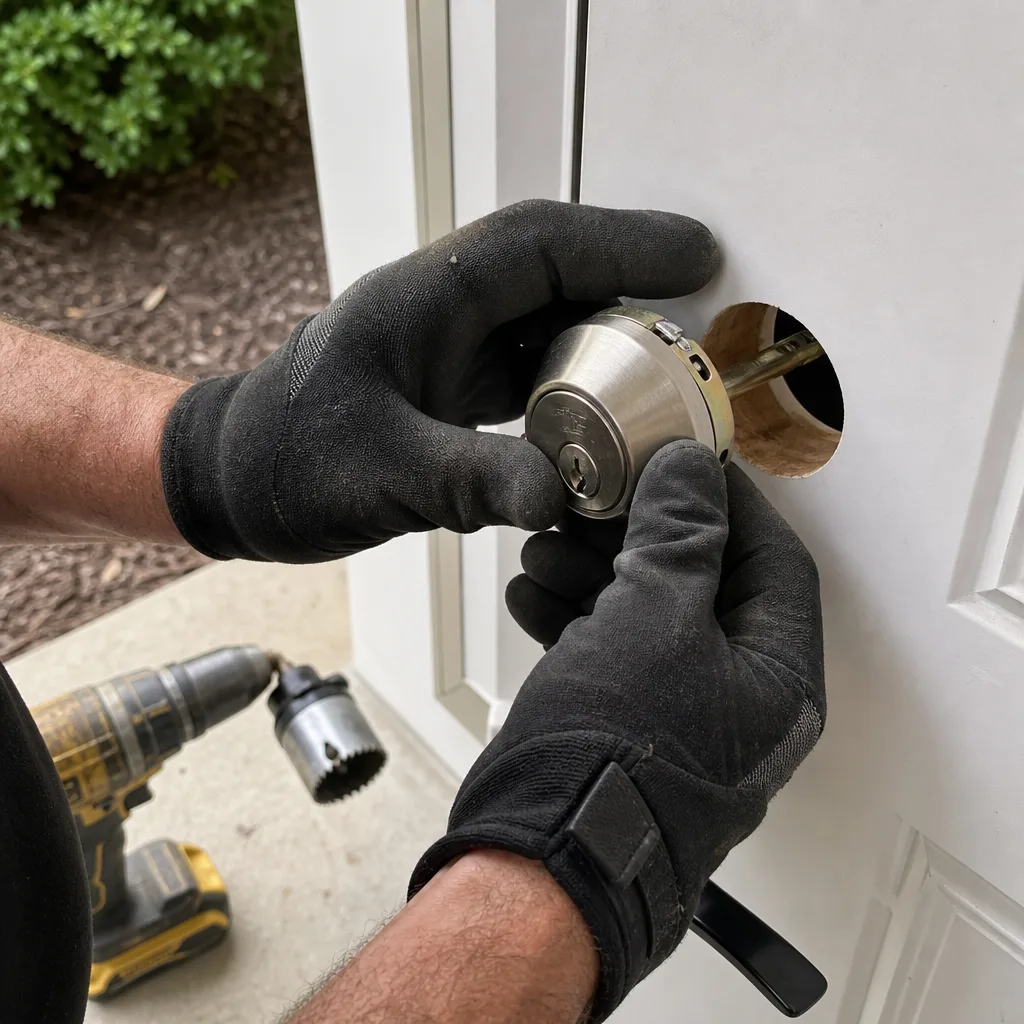
Call a qualified locksmith when the work affects security, life safety, or property value - which is most lock work beyond simple interior door knob replacement. Specifically: when installing panic bars or exit devices on commercial doors; when modifying access control systems integrated with fire alarms; when replacing hardware on any fire-rated door; when preparing a property for sale and needing documentation of compliant installation; or when you have received a correction notice from a fire marshal or building inspector. Novak Lock & Security Atlanta offers free estimates in Atlanta - call (470) 944-6813. We will assess the scope, identify any permitting requirements, and quote a firm price in writing before any work begins. Explore more guides & resources on residential and commercial lock compliance.
Frequently Asked Questions
No. Georgia does not require locksmiths to hold a state license, which means consumers must verify credentials, insurance, and business licensing independently. Ask for proof of general liability insurance, a current City of Atlanta business license, and references from recent local work before hiring any locksmith.
Typically no. Replacing or rekeying existing locks on standard residential doors does not require a City of Atlanta building permit. However, if the door is fire-rated (common for garage-to-house doors), or if you are installing a double-cylinder deadbolt on a required exit, code compliance issues may arise. Call (470) 944-6813 for an exact quote - estimates are free.
Commercial panic bar installation, delayed-egress device installation, access control system wiring, any modification to fire-rated door assemblies, and new door framing typically require permits. The specific permit type depends on scope: building permit for door modifications, electrical permit for powered access control, and fire marshal inspection for egress hardware. Verify requirements with the City of Atlanta Office of Buildings before starting work.
Remediation costs typically range from $800 for a simple fire door replacement with proper hardware to $2,500 or more for multiple doors requiring permits, inspection, and associated delays. The cost increases if closing timelines are short and expedited permitting is required. The preventive cost of permitted, documented installation is almost always lower.
At Novak Lock & Security Atlanta, yes. Haven Standard Clause 1 prohibits our technicians from changing the quoted price at the door. The price we quote on the phone, based on the scope you describe, is the price on the invoice. If site conditions reveal additional necessary work, we stop, explain, and obtain written authorization for the revised scope before proceeding. Call (470) 944-6813 for a firm quote - estimates are free.
Fire-rated doors carry a label, typically on the hinge edge, indicating the rating (usually 20, 45, 60, or 90 minutes) and the certifying laboratory. The frame will have a matching label. If labels are painted over or missing, a qualified locksmith or inspector can often identify the rating by construction features. We document door ratings as part of our standard assessment on commercial and multi-family residential jobs.
A locksmith without a residential or general contractor’s license cannot pull permits that require a licensed contractor’s signature. For permit-required lock work, the locksmith typically works under a general contractor’s permit or the property owner pulls an owner-builder permit. We coordinate permit requirements with project GCs and explain the pathway clearly for owner-direct work. Call (470) 944-6813 to discuss your specific project.
The Bottom Line
Georgia’s lack of locksmith licensing places the burden of verification entirely on the consumer. In Atlanta, this gap intersects with active building and fire codes that do regulate specific lock installations - particularly commercial egress hardware, access control systems, and fire door modifications. The homeowner or property manager who understands which installations trigger permits, who can legally certify compliance, and how to verify a contractor’s history avoids the expensive surprise of unpermitted work surfacing at sale or inspection. Documentation, written pricing, and direct verification are the available protections in a market without state-mandated credentials. Novak Lock & Security Atlanta has operated under these conditions since 2002, with a single rule that cuts through the uncertainty: every job starts with a written price and ends with a documented record.
Written by Daniel Novak, Owner at Novak Lock & Security Atlanta, serving Atlanta since 2002.